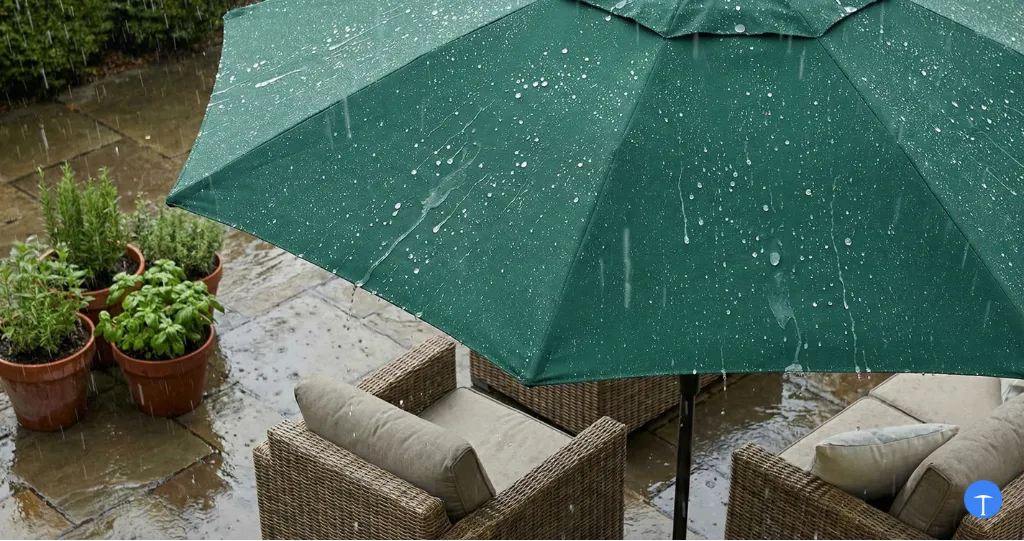
The best fabric for patio umbrellas depends on your climate, budget, and how long you want your canopy to last. Solution-dyed acrylic (like Sunbrella) offers the best overall performance with superior fade resistance and durability, lasting 10+ years in harsh conditions. For budget-conscious buyers, coated polyester provides decent UV protection at a fraction of the cost, though you should expect to replace it every three to five years.
Choosing the right umbrella canopy material makes the difference between a purchase you forget about and one that frustrates you every summer. This guide breaks down every fabric option available, ranks them by performance, and helps you match the right material to your specific situation.
Your patio umbrella fabric takes more punishment than almost any other outdoor textile you own. It faces direct UV exposure for hours daily, gets soaked by rain, whipped by wind, and in coastal areas, assaulted by salt air. The canopy is the most critical component because when it fails, your entire umbrella becomes useless.
A quality fabric protects you from harmful UV rays, stays looking good season after season, and resists mold and mildew. A poor fabric fades within months, starts tearing at stress points, and can actually let more UV through as it degrades. The fabric you choose directly impacts your comfort underneath the umbrella and your long-term satisfaction with the purchase.
Common Mistake: Most umbrella failures start with the fabric, not the frame. Frames typically outlast canopies by years, which means your fabric choice determines whether you get three years or 15 years from your investment.
| Fabric Type | UV Protection | Fade Resistance | Water Resistance | Breathability | Price Range | Lifespan | Best For |
|---|---|---|---|---|---|---|---|
| Solution-Dyed Acrylic | Excellent (98%+) | Excellent | Very Good | Excellent | $300-800+ | 10-15 years | Premium residential, commercial |
| Coated Polyester | Good (90-95%) | Fair to Good | Good | Moderate | $80-250 | 3-5 years | Budget residential |
| Olefin | Good (90-93%) | Very Good | Good | Good | $150-350 | 5-8 years | Value seekers, poolside |
| Cotton Canvas | Poor (70-80%) | Poor | Poor (untreated) | Excellent | $100-300 | 2-4 years | Traditional aesthetics |
| Vinyl/PVC | Excellent (98%+) | Good | Excellent | Poor | $150-400 | 5-10 years | Commercial, heavy rain areas |
Solution-dyed acrylic represents the gold standard in outdoor umbrella fabric. The color gets added to the liquid acrylic before the fibers form, meaning the pigment exists throughout the entire fiber rather than just on the surface. This manufacturing process is why these fabrics resist fading so remarkably well.
Sunbrella is the most recognized brand, but O’bravia, Outdura, and Tempotest use similar technology with comparable results. These fabrics block 98% or more of UV rays, breathe well to prevent heat buildup underneath, and resist mold and mildew without chemical treatments.
The downsides are real though. Expect to pay $300 to $800 or more for an umbrella with solution-dyed acrylic. That premium pricing puts these fabrics out of reach for casual buyers. For a deeper look at whether the investment makes sense for you, our Sunbrella vs regular fabric comparison breaks down the real-world cost differences.
Polyester dominates the market because it hits the price point most buyers want. You will find polyester canopies on the majority of umbrellas under $200. The fabric itself resists stretching, dries quickly, and holds up reasonably well to normal use.
The catch is that polyester relies entirely on surface coatings for UV protection and water resistance. Those coatings degrade over time, especially under intense sun exposure. An umbrella in Phoenix loses its protective coating much faster than one in Seattle.
Important: Quality varies enormously within the polyester category. A 180 gram per square meter polyester with PU coating performs significantly better than a lightweight 120 gsm fabric with minimal treatment. Always check fabric weight specifications when shopping polyester umbrellas.
Olefin flies under the radar but deserves serious consideration for value-focused buyers. Like solution-dyed acrylic, olefin accepts dye throughout the fiber rather than just on the surface. This gives it excellent colorfastness that rivals much more expensive fabrics.
The material resists moisture, dries incredibly fast, and handles pool chemicals without degrading. These properties make olefin particularly popular for umbrellas near pools or hot tubs.
Where olefin falls short is UV protection. It naturally blocks less ultraviolet radiation than acrylic, though manufacturers add UV stabilizers to improve performance. Olefin also tends to feel slightly rougher than acrylic and can pill over time with abrasion.
Cotton canvas umbrellas appeal to buyers wanting a traditional, natural look. The fabric breathes beautifully and creates a distinctive aesthetic that synthetic materials cannot replicate.
That aesthetic comes with significant maintenance requirements. Cotton absorbs water, promoting mold and mildew growth in humid climates. It fades rapidly without treatment, and even treated cotton needs regular reapplication of protective sprays. Our canvas vs polyester comparison details these maintenance realities.
Climate Warning: Cotton canvas works best in dry climates where moisture is not a concern. In humid environments like Florida or the Gulf Coast, cotton creates more problems than it solves.
Vinyl and PVC coated fabrics prioritize waterproofing above all else. These materials create a completely impermeable barrier, making them popular for commercial applications where rain must not penetrate.
The waterproofing comes at a cost. These fabrics trap heat underneath, making the shade feel stuffy on hot days. They also tend to crack in extreme cold and can feel sticky in high heat.
You will see vinyl fabrics most often on commercial umbrellas at restaurants and cafes where keeping customers dry during sudden showers matters more than peak comfort on hot days. For residential use, the breathability trade-off usually is not worth it.
Solution-dyed acrylic wins the UV protection category with 98% or higher blockage. If sun protection is your primary concern, perhaps because you have fair skin, take medication that increases sun sensitivity, or live in an extreme UV environment like Arizona or Australia, acrylic is the clear choice.
Vinyl coated fabrics match acrylic for UV blockage but sacrifice breathability. For maximum UV protection with comfort, stick with acrylic.
Polyester and olefin both hover around 90 to 95% UV blockage when new, but polyester’s protection diminishes faster as coatings wear.
Durability rankings based on real-world lifespan under normal residential use:
Best Practice: These timelines assume proper care. Close your umbrella during storms, clean it regularly, and never store it while wet. Proper maintenance extends lifespan dramatically regardless of fabric type.
Olefin offers the best value for buyers willing to spend slightly more than bottom dollar. You get solution-dyed colorfastness without the premium acrylic price tag.
For strict budget shoppers, a quality heavyweight polyester (look for 180+ gsm with PU coating) outperforms cheap acrylics at similar price points. A well-made polyester umbrella beats a poorly constructed acrylic one.
The worst value is cheap cotton canvas. You pay a premium for the look but get inferior performance and high maintenance requirements.
Phoenix, Palm Springs, Las Vegas, and similar desert environments demand UV-resistant, breathable fabric. Solution-dyed acrylic handles intense sun exposure without degrading, and its breathability prevents the canopy from becoming a heat trap.
Common Mistake: Polyester fails fastest in hot, sunny climates. The coating that provides UV protection breaks down under relentless sun, leaving the base fabric exposed. If budget requires polyester, choose the darkest color available and plan for replacement every two to three years.
Seattle, Portland, and the Pacific Northwest see plenty of moisture but moderate temperatures. Here, mold and mildew resistance matters more than extreme UV protection.
Solution-dyed acrylic handles these conditions easily. Olefin’s quick-drying properties also make it suitable. Avoid cotton canvas entirely in humid climates unless you commit to rigorous maintenance.
Surprisingly, vinyl performs well in rainy environments despite its other limitations. The complete waterproofing prevents moisture penetration, and moderate temperatures avoid the heat buildup problems vinyl causes in hot climates.
Salt air accelerates fabric degradation. Solution-dyed acrylic resists salt damage better than any alternative, making it the default recommendation for oceanfront properties.
Olefin also handles coastal conditions reasonably well due to its inherent moisture resistance. Standard polyester degrades quickly in salty environments as salt crystals work their way into fiber coatings and break them down.
Pro Tip: Frame material matters as much as fabric in coastal settings. Pairing the right fabric with a corrosion-resistant frame creates a combination that lasts. Check our guide on aluminum vs wood umbrella frames for frame recommendations.
Fabric weight, measured in grams per square meter (gsm), indicates density and typically correlates with durability. For polyester umbrellas, look for 180 gsm or higher. Budget umbrellas often use 120 to 150 gsm fabric that tears more easily and fades faster.
Denier measures fiber thickness. Higher denier creates stronger fabric. A 600 denier polyester significantly outperforms a 300 denier version. However, denier alone does not tell the whole story because weave density and coatings also affect performance.
For solution-dyed acrylics, weight matters less because the fiber quality itself provides durability. Sunbrella and similar brands typically weigh around 240 to 290 gsm.
Important: When shopping, treat weight and denier as comparison tools within a fabric category. A 200 gsm polyester generally outperforms a 150 gsm polyester. But do not compare across categories because a 150 gsm acrylic still outperforms a 200 gsm polyester for fade resistance.
Coatings transform base fabrics by adding properties they lack naturally. Understanding common treatments helps you evaluate umbrella quality.
PU (Polyurethane) Coating adds water resistance to polyester. Look for multiple coating layers for better performance. Quality PU coatings also improve UV blockage.
Acrylic Backing improves UV protection and adds water resistance. Often found on mid-range polyester umbrellas as an upgrade from basic PU coating.
Teflon and DWR (Durable Water Repellent) treatments cause water to bead and roll off fabric. These wear off over time but can be reapplied with aftermarket sprays.
UV Stabilizers get added to olefin and polyester to slow degradation from sun exposure. You cannot see these, so rely on manufacturer specifications.
Silver or reflective coatings appear on some canopies marketed for extreme heat. These can improve heat rejection but often wear poorly and create an industrial appearance.
When shopping for a market umbrella or cantilever umbrella, use these practical tests to assess fabric quality.
Check the specifications. Reputable manufacturers list fabric type, weight, and any coatings. Missing specifications usually indicate lower quality.
Feel the fabric. Quality acrylic feels soft but substantial. Cheap polyester feels thin or plasticky. Canvas should feel tightly woven with no visible gaps.
Look at the seams. Double-stitched seams with UV-resistant thread indicate quality construction. Single stitching and thin thread suggest corners were cut.
Examine color consistency. Solution-dyed fabrics should have identical color on both sides. Polyester often looks faded on the underside because only the top receives coating.
Quality Indicator: Check the warranty. Manufacturers confident in their fabric offer 5+ year fade warranties. One to two year warranties indicate they expect problems.
For polyester umbrellas, 600 denier or higher provides good durability. However, denier only measures fiber thickness. A 600 denier fabric with poor coating still underperforms a quality 400 denier with excellent treatment. Use denier as one factor among several rather than the sole quality indicator.
Darker colors generally block slightly more UV than lighter colors, but the difference is smaller than most people assume. A quality white acrylic canopy still blocks 98%+ of UV. Choose color based on preference and heat considerations because dark colors absorb more heat and create warmer shade.
Aftermarket fabric sprays can restore water repellency and add modest UV protection to aging canopies. Products like 303 Fabric Guard work well for maintenance. However, no treatment transforms cheap fabric into premium fabric. Sprays cannot fix fundamental issues with thin, poorly made material.
Water-resistant fabrics repel light moisture and allow small amounts of water to bead and roll off. Water will eventually penetrate under sustained rain. Waterproof fabrics (like vinyl) block all water penetration but sacrifice breathability. Most quality outdoor fabrics are water-resistant rather than waterproof, which suits residential use better.
Replace your canopy when you notice visible fading beyond your tolerance, fabric feels thin or brittle to the touch, water soaks through instead of beading, stitching starts failing at seams, or you can see light through worn spots. Continuing to use degraded fabric provides less UV protection than the original specifications.
Modern recycled polyester performs comparably to virgin polyester for most umbrella applications. Some premium brands like Sunbrella now offer recycled content options that match their standard warranties. Check the specific product warranty rather than assuming recycled means lower quality.
For most homeowners, the fabric choice comes down to how long you plan to keep the umbrella and how harsh your climate is.
Choose solution-dyed acrylic if you live in a harsh sun or coastal environment, want a 10+ year lifespan, or prefer buying once rather than replacing repeatedly. The upfront premium pays off through longevity. Read our complete guide to Sunbrella fabric to understand exactly what you are buying.
Best Value Pick: Choose olefin if you want good value, have a poolside location, or live in a moderate climate where extreme UV resistance is less critical. This fabric punches above its price point.
Choose quality polyester if budget is the primary concern. Look for 180+ gsm weight, PU coating, and buy from brands offering at least three year warranties. Accept that you will replace it sooner than premium alternatives.
Avoid cotton canvas unless you specifically want that traditional aesthetic and commit to the maintenance requirements. The look is distinctive but the performance compromises are significant.
Consider vinyl only for commercial applications or locations where waterproofing matters more than comfort.
The right umbrella for your space combines appropriate fabric with a quality frame and proper sizing. Fabric gets you most of the way there, but the complete package matters for long-term satisfaction.