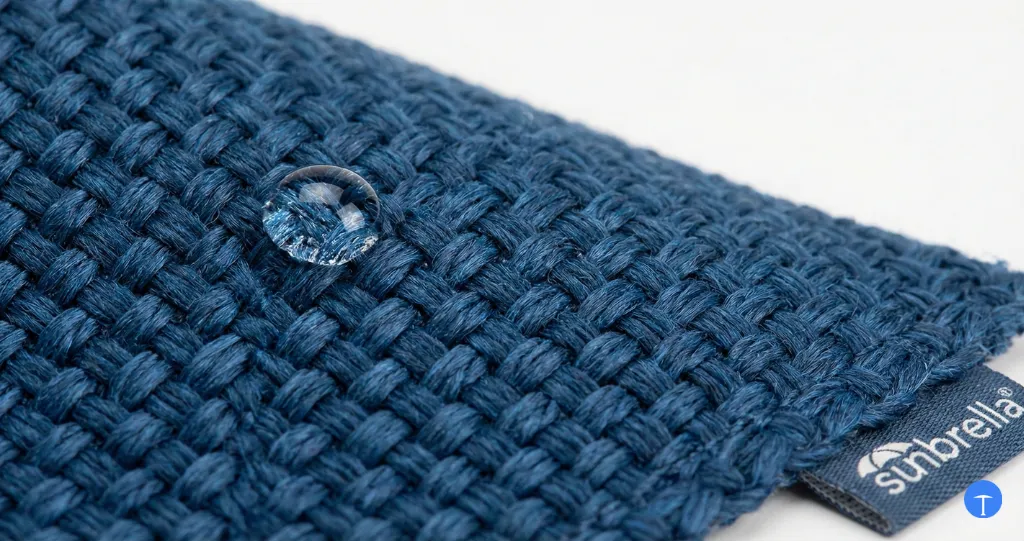
If you’ve shopped for a quality patio umbrella, you’ve seen Sunbrella fabric mentioned everywhere. But what is Sunbrella fabric exactly? Sunbrella is a brand of solution-dyed acrylic fabric manufactured by Glen Raven, a North Carolina textile company perfecting outdoor fabrics since 1961. It’s the gold standard for patio umbrella canopies because it resists fading, repels water, and outlasts cheaper alternatives by years.
This guide covers what makes Sunbrella different and whether the investment makes sense for you.
Sunbrella fabric is a woven acrylic textile specifically engineered for outdoor performance. Glen Raven developed it for boat awnings in the 1960s, and the technology proved so durable it expanded into patio furniture, umbrellas, and outdoor cushions.
What sets Sunbrella apart is the manufacturing process. Most outdoor fabrics start as white fibers, then get dyed after weaving. Sunbrella takes the opposite approach: color gets added to the acrylic fibers before they’re spun into thread. This solution-dyeing process means color exists throughout each fiber rather than sitting on the surface.
The result is fabric that maintains its appearance through years of sun, rain, and general outdoor abuse. When you compare a Sunbrella umbrella to regular fabric after five years, the difference is obvious. Standard polyester fades noticeably within two to three seasons, while Sunbrella typically looks nearly identical to day one.
Understanding solution dyeing explains why Sunbrella outperforms conventional outdoor fabrics.
Traditional fabric dyeing works like painting a wall. You apply color to the surface, and it penetrates somewhat, but each fiber’s core remains its original color. When UV rays, rain, and friction wear away that outer layer, fading becomes visible.
Solution dyeing works differently. Glen Raven adds UV-stabilized pigments directly into liquid acrylic before it becomes fiber. Think of it like adding food coloring to cake batter rather than frosting a finished cake. The color goes all the way through.
Cut a Sunbrella thread and the color appears consistent from outer surface through to the center. Scratch the surface, and you expose more of the same color. This is why Sunbrella canopies withstand years of weathering without the bleached, washed-out look that plagues cheaper fabrics.
Key Difference: Surface-dyed fabrics fade from the outside in as UV rays break down the outer color layer. Solution-dyed Sunbrella would need to lose the entire fiber thickness before showing color loss, which takes decades rather than seasons.
The acrylic fiber itself also matters. Acrylic naturally resists moisture absorption, preventing fiber degradation that affects cotton canvas and some polyester blends.
Sunbrella’s reputation rests on measurable performance characteristics. Here’s what the fabric actually delivers:
| Performance Metric | Sunbrella Rating | What It Means |
|---|---|---|
| UV Protection | Blocks 98%+ of UV rays | Significant shade and skin protection underneath |
| Water Resistance | Highly water resistant, breathable | Sheds rain but allows air circulation to prevent mildew |
| Fade Resistance (warranty) | 5 to 10 years depending on product line | Color guaranteed not to fade below acceptable standards |
| Mold/Mildew Resistance | Inherently resistant | Acrylic doesn’t support mold growth; fabric stays cleaner |
| Breathability | Excellent | Air passes through weave, reducing heat buildup |
| Typical Lifespan | 10 to 15 years with proper care | Outlasts most umbrella frames |
| Cleaning Ease | Simple soap and water | No special cleaners required for routine maintenance |
Sunbrella fabric blocks over 98% of harmful UV radiation, protecting both your skin and the fabric itself from sun damage.
The UV blocking comes from tight weave structure and UV stabilizers added during manufacturing. Unlike spray on treatments that wear off, Sunbrella’s protection is permanent.
For context, a standard cotton t-shirt provides roughly UPF 5 protection. Sunbrella fabrics test at UPF 50 or higher, blocking at least 98% of UV rays. When choosing the best fabric for patio umbrellas, this protection level matters if shade quality is a priority.
Fade resistance is where Sunbrella genuinely earns its premium. The solution-dyeing process creates color stability that surface-dyed fabrics cannot match.
Glen Raven tests fabrics using accelerated weathering machines simulating years of sun exposure. Sunbrella consistently maintains color integrity far longer than competitors. In real-world use, canopies still match your outdoor furniture years after purchase.
The fade resistance warranty, typically five to ten years depending on product line, backs this financially. If your Sunbrella canopy fades beyond acceptable standards during warranty, Glen Raven replaces the fabric.
Sunbrella is naturally water resistant without applied coatings. Acrylic fibers don’t absorb water, so rain beads up and runs off. This differs from waterproof fabrics that block water entirely but trap moisture and heat underneath.
The breathability matters. A waterproof canopy creates humid conditions that encourage mold and make sitting underneath uncomfortable on warm days. Sunbrella’s breathable weave allows air circulation while still shedding rain.
Mold resistance comes from the fiber chemistry. Acrylic doesn’t provide nutrients for mold growth. While mold can grow on dirt accumulated on the surface, regular cleaning prevents this.
With reasonable care, Sunbrella umbrella canopies last ten to fifteen years. Many outlast the umbrella frame and mechanical parts significantly.
The durability comes from solution-dyed acrylic fiber and Sunbrella’s weaving standards. The fabric resists tearing, abrasion, and gradual weakening. You’ll often see hardware fail before the canopy shows serious wear.
This longevity changes value calculations. A cheap polyester umbrella replaced every three years costs more over a decade than a Sunbrella model lasting the duration.
Glen Raven backs Sunbrella fabrics with one of the industry’s strongest warranties. Most Sunbrella umbrella fabrics carry a five year limited warranty against fading.
The warranty covers fabric becoming “unserviceable” due to color fading or strength loss from normal use. It doesn’t cover physical damage, mold from improper care, or cosmetic issues not affecting function.
For warranty claims, you need proof of purchase and the fabric must have a genuine Sunbrella label. Glen Raven has a straightforward claims process at sunbrella.com.
Important: The warranty covers fabric, not the finished umbrella. For an umbrella with Sunbrella canopy, fabric claims go through Glen Raven; frame issues go through the umbrella manufacturer. Keep both receipts.
Not all Sunbrella fabric is identical. Glen Raven produces several product lines with different weights, weaves, and applications, plus hundreds of colors and patterns.
For patio umbrellas, you’ll encounter:
Sunbrella Canvas is the standard line with core performance characteristics at the entry price point. Most residential umbrella canopies use this grade. It comes in over 100 solid colors ranging from neutrals to vibrant hues.
Sunbrella Plus adds a protective finish for enhanced water resistance. Common on umbrellas marketed as extra water resistant, it maintains the same fade resistance as Canvas.
Sunbrella Marine Grade is designed for boat covers with maximum weather exposure. Some premium commercial umbrellas use it, though it’s overkill for typical patio use.
Beyond solids, Sunbrella offers stripes, textures, and patterns specifically designed for outdoor use. The solution-dyeing process means even complex patterns maintain color consistency over years of exposure. When matching patio furniture or coordinating with your home’s exterior, this selection flexibility matters.
Fabric weight varies too. Most quality umbrella canopies use Sunbrella in the 8 to 10 ounce per square yard range, balancing durability with appropriate drape.
The market has knockoffs claiming Sunbrella quality without delivering. Here’s how to verify authenticity:
Common Mistake: Buying “Sunbrella-like” or “Sunbrella-style” fabric thinking it’s the real thing. These marketing terms mean nothing and often indicate inferior solution-dyed acrylic or standard polyester with no fade warranty.
Check for labels. Genuine Sunbrella has branded tags sewn in or labels printed on the back. Tags include the Sunbrella name and often the fabric line and color code.
Buy from authorized dealers. Glen Raven maintains an authorized dealer network. Major umbrella brands using genuine Sunbrella advertise it prominently.
Request documentation. Legitimate manufacturers provide material specifications. If a seller can’t verify fabric origin, be skeptical.
Compare pricing. Sunbrella costs more than alternatives. An umbrella advertised with Sunbrella at significantly below competitor pricing probably isn’t genuine.
When comparing aluminum and wood umbrella frames, the canopy fabric matters at least as much as frame material for longevity.
Sunbrella is low maintenance, but proper care extends lifespan and appearance.
For routine cleaning, brush off loose dirt and rinse with water. For deeper cleaning, mix mild soap with water, apply with a soft brush, and rinse thoroughly. Let fabric air dry completely before closing.
For stubborn stains, Glen Raven recommends a bleach solution: one cup bleach per gallon of water with quarter cup mild soap. This won’t damage color since dye goes through the fiber. Rinse thoroughly.
Pro Tip: Unlike most fabrics, Sunbrella can handle bleach without fading because the color runs through the entire fiber. This makes removing mold, bird droppings, and tree sap much easier than with conventional umbrella fabrics.
Avoid pressure washers, which damage the weave. Don’t use harsh solvents.
Storage matters. If closing your umbrella for extended periods, ensure fabric is completely dry first. For umbrellas in windy areas, closing when not in use prevents unnecessary stress on fabric and frame.
Sunbrella typically costs 40% to 100% more than comparable polyester umbrella canopies. Whether that premium makes sense depends on your situation.
Best Practice: Match your canopy investment to your frame quality. A Sunbrella canopy on a premium aluminum or teak frame maximizes longevity. Pairing it with a budget frame that fails in three years wastes the fabric’s 10+ year potential.
Sunbrella makes sense if: You plan to keep the umbrella for five or more years. The longevity advantage only pays off with extended use. Color matching matters. If you’ve coordinated outdoor furniture and want consistent appearance over time, Sunbrella’s fade resistance delivers. You have intense sun exposure. Full southern exposure accelerates fading dramatically on cheaper fabrics. You’re buying a quality frame. Pairing a budget frame with a premium canopy wastes money when the frame fails first.
Standard polyester might be fine if: You’re renting or might move soon. The umbrella sees limited use or stays stored most of the time. You prefer replacing umbrellas every few years for updated styles. Budget is the primary constraint.
For most homeowners planning to stay put, Sunbrella’s combination of durability, appearance retention, and warranty protection justifies the higher initial cost through reduced replacement frequency.
Browse top rated market umbrellas to compare Sunbrella options with alternatives at various price points.
No. Glen Raven produces multiple product lines with different weights, weaves, and finishes. However, all genuine Sunbrella fabrics use the same solution-dyeing process that provides core fade resistance. The differences are mostly in weight, water resistance treatments, and intended applications.
Look for Sunbrella branded tags sewn into the fabric or printed labels on the back side. Genuine tags include the Sunbrella name and often list the specific fabric line and color code. Buying from authorized dealers and established umbrella brands provides additional assurance.
No. Sunbrella is naturally water resistant due to the acrylic fiber properties. Adding waterproofing sprays can actually reduce breathability without improving performance. The fabric sheds water effectively straight from the factory.
Yes. Small tears can be patched with Sunbrella repair tape or sewn. For larger damage, many awning and marine canvas shops can replace individual panels. Patches won’t fade at different rates since all Sunbrella fabric uses solution-dyed fibers.
Brush off loose dirt and rinse with water for routine cleaning. For deeper cleaning, use mild soap and water with a soft brush, then rinse thoroughly. Stubborn stains respond to a diluted bleach solution. Always let the fabric dry completely before storing.
Yes. Sunbrella fabrics range from lighter weights around 6 ounces per square yard to heavier marine grades over 10 ounces. Most patio umbrella canopies use 8 to 10 ounce fabric, which balances durability with appropriate drape and weight.
Sunbrella fabric earned its reputation as the premium choice for patio umbrellas through genuine performance advantages. The solution-dyeing process creates fade resistance that surface-dyed fabrics simply cannot match. Combined with inherent water resistance, mold resistance, and proven durability, it delivers value over the lifespan of your umbrella that cheaper options don’t.
The premium price makes sense for anyone planning to keep their umbrella for years and wanting it to look good throughout. If you’re investing in quality outdoor living space, skimping on canopy fabric often costs more in the long run through frequent replacements.