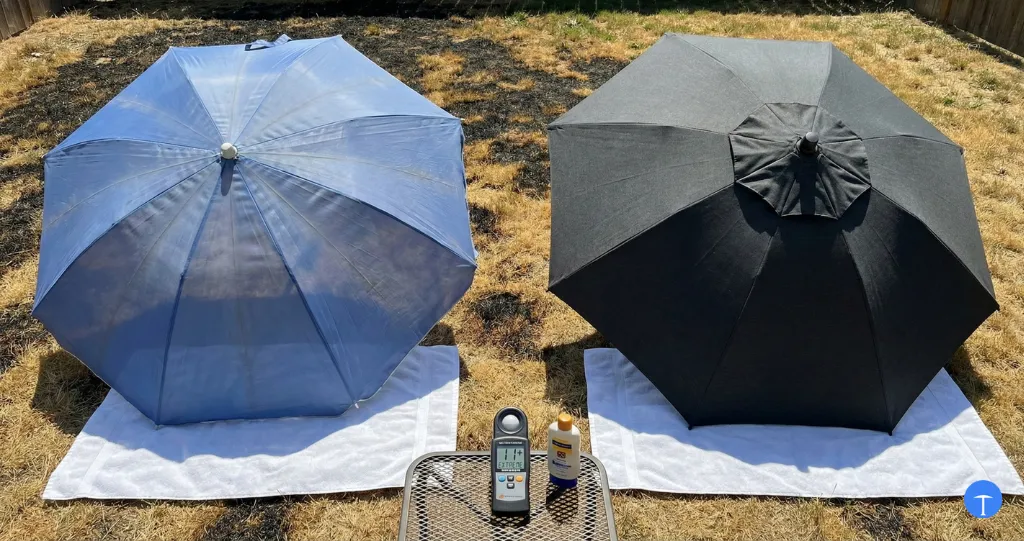
No, not all patio umbrellas provide meaningful UV protection. A standard polyester patio umbrella with no UV treatment blocks roughly 50% to 80% of UV radiation, depending on fabric weight and color. An umbrella with UPF rated fabric (UPF 50+) blocks 98% or more. Spend two or three hours under your umbrella on a summer afternoon and that gap translates to a real increase in UV exposure on your skin.
These UV principles apply equally to personal sun umbrellas and beach umbrellas. This guide focuses on patio umbrellas, but the science carries across all of them. If UV protection matters to you, look for umbrellas with a stated UPF rating, darker canopy colors, and tightly woven or coated fabric.
UPF stands for Ultraviolet Protection Factor. It measures how much UV radiation a fabric allows through to whatever sits underneath. A UPF 50+ rated fabric lets less than 2% of UV penetrate, which is the highest standard in the industry.
The scale breaks into three tiers. UPF 15 to 24 is good protection (93.3% to 95.9% blocked). UPF 25 to 39 is very good (96% to 97.4%). UPF 50+ is excellent (98% or more). Not every umbrella manufacturer tests their canopy for UPF. No label does not mean zero protection. It means the level is untested and variable.
UPF and SPF measure related but different things. SPF applies to sunscreen and measures how long treated skin can resist UVB rays before burning. UPF applies to fabric and measures how much total UV radiation, both UVA and UVB, the fabric transmits. A UPF 50 fabric is roughly equivalent to evenly applied SPF 50 sunscreen, except the fabric does not wear off, sweat away, or need reapplication.
UPF ratings follow ASTM or AS/NZS laboratory standards. A fabric sample is exposed to a controlled UV source while instruments measure how much UV passes through the weave across the full solar spectrum. The test accounts for both UVA and UVB wavelengths. Fabrics must be tested in new condition, and sometimes after simulated aging, to earn a UPF label. You can read more about the testing methodology from the Skin Cancer Foundation.
Your canopy fabric is the single biggest factor in how much UV reaches you. Choosing the best umbrella fabric for sun protection starts with understanding how each material performs.
| Fabric Type | Typical UPF Range | UV Blocked | Sun Durability | Price Tier | Notes |
|---|---|---|---|---|---|
| Sunbrella Acrylic | UPF 50+ | 98%+ | Excellent | Premium | Industry standard for UV protection |
| Solution Dyed Acrylic | UPF 40 to 50+ | 96% to 98%+ | Excellent | Mid to Premium | Color saturates entire fiber |
| Polyester (Heavy) | UPF 15 to 35 | 85% to 97% | Good | Mid Range | Weight and weave matter significantly |
| Polyester (Light) | UPF 5 to 15 | 50% to 80% | Fair | Budget | Most common budget umbrella fabric |
| Olefin | UPF 40 to 50+ | 90% to 98%+ | Very Good | Mid Range | Naturally UV resistant fiber |
| Canvas/Cotton (Untreated) | UPF 5 to 10 | 30% to 50% | Poor | Varies | Degrades quickly in sun and rain |
| Canvas/Cotton (UV Treated) | UPF 25 to 40 | 90% to 97% | Fair to Good | Mid Range | Coating degrades over seasons |
| Vinyl/PVC Coated | UPF 50+ | ~100% | Good | Varies | Blocks UV but traps heat, not breathable |
Sunbrella is the industry benchmark for UV performance in patio umbrellas. Most Sunbrella fabrics achieve UPF 50+ without additional coatings because the acrylic fibers are solution dyed, meaning color is embedded throughout the entire fiber during manufacturing. This process also makes the fabric highly fade resistant, which directly supports long term Sunbrella UPF performance. Non Sunbrella solution dyed acrylics perform similarly, typically in the UPF 40 to 50+ range.
Polyester is the most common canopy material in budget and mid range patio umbrellas, and its UV performance varies enormously. Heavy weight polyester in a dark color with a tight weave can block 85% or more of UV. Lightweight polyester in white or a pastel might only block 50% to 60%. If your umbrella came bundled with a patio furniture set and the fabric feels thin, polyester umbrella UV protection is likely on the lower end of that range. For more on how color affects performance, our guide on what color umbrella is coolest covers the UV angle in detail.
Olefin is a naturally UV resistant fiber that typically blocks 90% or more of UV radiation even without special treatment. It is less common in patio umbrellas than polyester or acrylic, but availability is growing. Olefin is also lightweight, quick drying, and resistant to mold, making it a practical choice for outdoor use. For a broader look at how canopy fabric connects to frame design and overall durability, the types of patio umbrellas guide covers those connections.
Untreated cotton canvas blocks only 30% to 50% of UV rays and absorbs water, accelerating degradation outdoors. UV treated canvas improves to UPF 25 to 40, but the coating wears down over seasons. If you choose canvas for aesthetic reasons, plan on retreating or replacing the canopy more frequently than a synthetic alternative.
Vinyl and PVC coated fabrics block near 100% of UV, making them the most effective UV barriers available. The trade off is airflow. These materials trap heat underneath the canopy, making them uncomfortable in warm weather. You will find vinyl more often in commercial shade structures than residential patio setups.
Fabric type sets the baseline, but several other variables raise or lower the actual UV protection you receive. If you want to know how to test umbrella UV blocking on your current setup, these are the factors to evaluate.
| Factor | Impact on UV Protection | What to Look For | Can It Be Improved? |
|---|---|---|---|
| Weave Density | High: tighter weaves block more UV by closing gaps | Hold fabric to light; fewer light points = better | No (set during manufacturing) |
| Fabric Weight (GSM) | Moderate to High: heavier fabric blocks more UV | 200+ gsm preferred; budget uses 140 to 160 gsm | No (replace canopy or umbrella) |
| Color/Dye Saturation | Moderate: darker, more saturated colors absorb more UV | Navy, black, forest green, burgundy outperform pastels | No (set at purchase) |
| UV Coating | High: adds UV blocking to otherwise moderate fabrics | Look for stated UV coating or UPF rating on spec sheet | Yes (aftermarket UV sprays exist but effectiveness varies) |
| Fabric Age | Moderate: UV protection degrades 10% to 30% over 3 to 5 years | Check for fading, thinning, or brittleness | No (replace canopy when degraded) |
| Coverage Angle | High: UV reflects off ground surfaces under umbrella | Larger canopy and lower tilt reduce side UV exposure | Yes (position umbrella lower, add side panels) |
A tighter weave physically closes the gaps where UV passes through. Hold canopy fabric up to bright light: if you see pinpoints of light, UV gets through those same openings. Fabric weight matters for the same reason. Budget umbrellas use fabric around 140 to 160 gsm, while premium canopies run 200 to 300 gsm. Our patio umbrella size chart helps match canopy dimensions to your space, but weight per square meter is worth checking in the specs too.
Darker and more saturated colors absorb more UV and allow less to reach you. A navy or black canopy in the same polyester blocks noticeably more UV than a white or pale yellow version. This applies across all umbrella fabric UV types, though the difference is most dramatic in polyester where color alone can shift UV blocking by 20% or more. The guide on what color umbrella is coolest covers how color affects both temperature and UV performance.
Some manufacturers apply UV blocking coatings to canopy fabric that would otherwise offer only moderate protection. These coatings work well when new but degrade over time with continued sun exposure and cleaning. If your umbrella lists a UV coating rather than an inherent UPF rating from the fabric itself, expect performance to decline after a few seasons. Look for UPF rating umbrella specs on the product page rather than vague “UV resistant” marketing language.
UV protection decreases as canopy fabric degrades from sun exposure, weather cycling, and aging. A five year old canopy blocks measurably less UV than when new, with typical degradation of 10% to 30% over three to five years. Fading, thinning, or brittleness indicate reduced performance. If your canopy shows these signs and UV matters, it is time to explore replacement options.
Your umbrella only blocks UV in the area directly under its canopy shadow. UV radiation that reflects off concrete, pool water, or sand reaches you from angles the canopy does not cover. A sunburn under a patio umbrella often happens not because the canopy failed but because reflected UV came in from the sides. A larger canopy positioned lower reduces this exposure, but no umbrella eliminates reflected UV entirely.
This is the misconception that catches most people off guard. Every umbrella creates shade by reducing visible light, which makes you feel cooler. But UV radiation includes invisible UVA and UVB wavelengths that can penetrate lighter fabrics without you noticing.
You can sit under a thin, light colored polyester canopy, feel noticeably cooler, and still absorb significant UV. That is why UPF rated fabric matters when patio umbrella sun protection is a genuine concern rather than just heat comfort. For a comparison of how umbrella styles affect shade coverage, the guide on how to choose a patio umbrella covers canopy shapes, tilt options, and mounting styles.
Start with the easiest check: look for a UPF rating label on the umbrella, its packaging, or in product specifications online. A stated UPF rating means the fabric was tested to a recognized standard. Next, check the fabric type. Sunbrella and solution dyed acrylic are strong indicators of high UV performance.
If you cannot find a label, hold the canopy up to bright sunlight from underneath. Less visible light generally means better UV blocking. Check fabric weight if specs are available (heavier is better), consider the canopy color (darker outperforms lighter), and if the umbrella is several years old, assume UV protection has decreased from its original level.
Prioritize UV protection when you spend two hours or more under the umbrella regularly, when children or elderly family members use the space, when anyone present burns easily, in high UV index locations or at altitude, during peak sun hours from 10am to 4pm, or near reflective surfaces like pools and concrete that bounce UV underneath the canopy. In these situations, a UPF 50 patio umbrella pays for itself. Check your local UV index forecast from the EPA to gauge your actual exposure risk.
If you spend less than an hour under the umbrella, already wear sunscreen and protective clothing, use the umbrella primarily for heat shade rather than UV concern, or sit where buildings and mature trees provide additional UV filtering, a standard polyester canopy without a UPF rating is likely adequate. Not every outdoor situation demands maximum UV blocking, and a budget umbrella still creates meaningful shade for casual use.
Yes, but the amount varies dramatically. A standard polyester patio umbrella blocks roughly 50% to 85% of UV depending on fabric weight, weave density, and color. That is meaningful shade but falls short of the 98%+ protection from a UPF 50+ rated canopy.
UPF 50+ is the gold standard, blocking 98% or more of UV radiation. If that is outside your budget, anything UPF 25 or above provides very good protection for most outdoor use. Our guide on whether umbrellas block UV covers how to evaluate UPF claims across different brands and price points.
Yes. Sun exposure, weather, and aging degrade fibers and UV coatings. Most canopies lose 10% to 30% of their UV blocking ability over three to five years. Visible fading and thinning are reliable indicators that protection has decreased.
Generally, yes. Darker and more saturated colors absorb more UV and transmit less underneath. A navy or forest green canopy outperforms white or pastels in the same fabric, with the effect most pronounced in polyester where color can shift UV blocking by 20% or more.
Aftermarket UV blocking sprays exist, but effectiveness varies and reapplication is needed each season. They can improve a moderate canopy by a few UPF points but will not transform thin polyester into a UPF 50+ performer. Replacing the canopy with higher rated fabric is more reliable if UV protection is a real priority.
Not all patio umbrellas are equal when it comes to UV protection, and the gap between a budget polyester canopy and a UPF 50+ rated acrylic is significant. If you spend real time outdoors under your umbrella, knowing what your canopy actually blocks matters. Check your fabric type, look for a UPF rating, and factor in color, weave density, and canopy age. Comparing acrylic vs polyester umbrella UV performance is the fastest way to understand where your setup falls on the protection spectrum. For those shopping new, our best market umbrellas and best cantilever umbrellas guides include UV performance in the selection criteria.