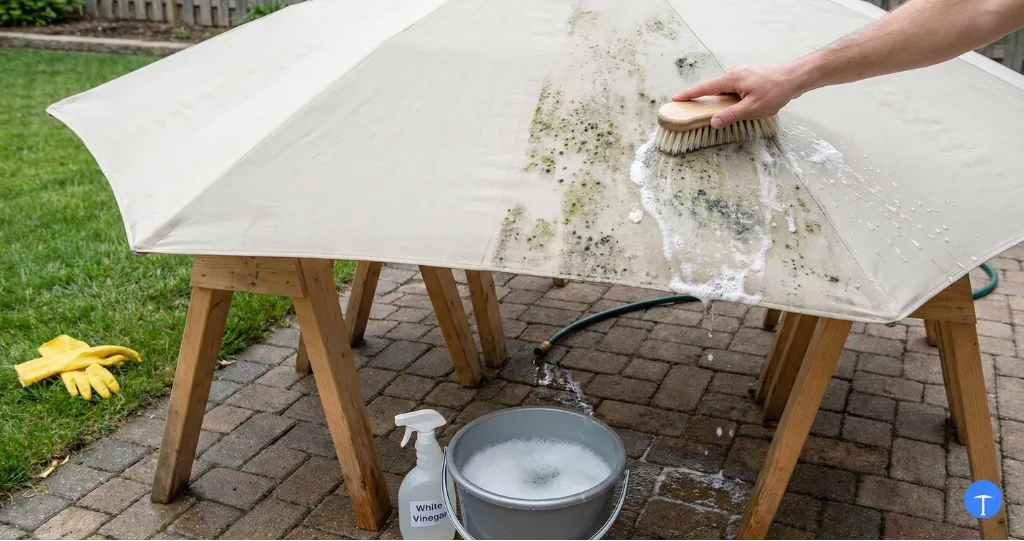
To clean mold off a patio umbrella, brush loose mold spores off the dry canopy with a soft bristle brush, apply a cleaning solution (white vinegar for all fabrics, diluted bleach for heavy mold on light fabrics, or oxygen bleach for color safe deep cleaning), let it sit for 10 to 15 minutes, scrub gently, and rinse thoroughly with a garden hose. The most critical step is letting the umbrella air dry completely in direct sunlight before closing or storing it. Putting a damp umbrella away is almost certainly what caused the mold in the first place.
For stain removal and routine care beyond mold, see the full patio umbrella cleaning guide.
Before you grab the cleaning supplies, it helps to understand why mold showed up so you can stop it from happening again. Mold and mildew (people use these terms interchangeably, though mildew technically stays on the surface while mold penetrates deeper) need moisture, warmth, and an organic food source to grow. Your patio umbrella canopy can deliver all three when conditions line up. Research from university extension programs confirms that any fabric stored in damp, poorly ventilated conditions creates an ideal mold habitat.
The number one cause is storing or closing the umbrella while the fabric is still damp. You close it after a rainstorm, wrap it in its cover, forget about it for a few days, and trapped moisture turns the inside of the canopy into a breeding ground. High humidity environments compound the problem because the canopy never fully dries between uses.
Organic debris plays a role too. Leaves, pollen, and bird droppings sitting on the fabric provide food for mold colonies. Combine that with a shaded storage spot where UV rays never reach the canopy, and you get those black spots and green patches you found when you opened the umbrella this spring.
A little preparation keeps you safe and protects the fabric from accidental damage.
Pick the right approach based on what you have on hand and how severe the mold is. Detailed step by step instructions follow in the next section.
| Cleaning Method | Best For | Fabric Safety | Strength Against Mold | Soak Time | Supplies Needed |
|---|---|---|---|---|---|
| White Vinegar Solution | Light to moderate mold, all fabrics | Safe for all fabric types | Moderate | 10 to 15 minutes | White vinegar, warm water, dish soap, spray bottle, soft brush |
| Diluted Bleach Solution | Heavy mold on white or light fabrics | Fades colored fabrics, avoid olefin | Strong | 10 to 15 minutes | Household bleach, water, sponge or spray bottle, soft brush, gloves |
| Oxygen Bleach Soak | Heavy mold on colored fabrics | Color safe, safe for most fabrics | Strong | 1 to 3 hours | Oxygen bleach powder, warm water, large tub, soft brush |
| Baking Soda and Vinegar Paste | Stubborn concentrated mold spots | Safe for all fabric types | Moderate to strong (targeted) | 5 to 10 minutes | Baking soda, white vinegar, soft brush |
Every method starts the same way: brush off loose dry mold with a soft bristle brush before applying any liquid. Do this while the canopy is completely dry to avoid grinding spores deeper into the fabric.
This is the safest starting point for any fabric type and the method to try first for light to moderate mold and mildew on your outdoor umbrella.
Mix one cup of white vinegar with one cup of warm water and a quarter teaspoon of dish soap in a spray bottle. After brushing off loose spores, spray generously onto every moldy area until the fabric is saturated. Let it sit for 10 to 15 minutes, then scrub gently with a soft bristle brush using small circular motions. Pay extra attention to seams where mold concentrates. Rinse thoroughly with a garden hose until no residue remains, and repeat on stubborn spots if needed.
Reserve this for heavy mold on white or light colored polyester, canvas, and vinyl only. Do not use this on colored fabrics, dark fabrics, or olefin.
Mix one quarter cup of regular household bleach per gallon of water. Apply with a sponge or spray bottle after brushing off dry spores. Let it sit for 10 to 15 minutes but do not exceed 15 minutes on fabric. Scrub gently and rinse thoroughly to remove all bleach residue, which will continue breaking down fibers if left behind.
Warning: Bleach can permanently fade colored fabrics, olefin, and some acrylic blends. Always test first. Never apply undiluted bleach to Sunbrella or other solution dyed acrylics.
This is the go to option when you need strong mold removal power on colored or dark canopies without risking fading.
Dissolve oxygen bleach powder per package directions (typically two scoops per gallon of warm water). If your canopy is removable, submerge it in a large plastic tub or clean trash can. If not, apply generously and keep the fabric wet by reapplying every 20 to 30 minutes. Soak for one to three hours depending on severity, scrub with a soft bristle brush, and rinse thoroughly.
Use this as a targeted treatment for stubborn mold patches that did not fully respond to the spray methods above. It is not practical for large areas, but it works well on concentrated spots.
Make a thick paste with three parts baking soda to one part water. Apply the paste directly onto the mold spots, then spray white vinegar over the paste. The fizzing reaction helps lift mold from the fabric fibers. Let it work for 5 to 10 minutes, scrub with a soft bristle brush, and rinse thoroughly.
Not every cleaning agent is safe for every fabric. If you are not sure what your umbrella is made from, check the canopy tag or the manufacturer’s website before choosing a method.
| Fabric Type | Recommended Method | Avoid | Mold Resistance | Drying Speed | Notes |
|---|---|---|---|---|---|
| Standard Polyester | Vinegar or oxygen bleach | Bleach on dark colors | Moderate | Fast | Most common umbrella fabric, responds well to all methods |
| Olefin | Vinegar or oxygen bleach | Chlorine bleach | Good | Fast | Naturally resists moisture absorption |
| Sunbrella (Solution Dyed Acrylic) | Diluted bleach per manufacturer guidelines or vinegar | Undiluted bleach | Excellent | Moderate | Mold is usually surface debris, not fabric penetration |
| Canvas (Cotton Blend) | Vinegar or oxygen bleach | Repeated chlorine bleach use | Poor | Slow | Most mold prone, absorbs and retains moisture |
| Vinyl and PVC Coated | Vinegar wipe | Abrasive scrubbing | Excellent | Very fast | Mold sits on surface only |
Standard polyester responds well to all four methods. Start with vinegar and escalate to oxygen bleach if needed. Avoid chlorine bleach on dark colors.
Olefin naturally resists moisture, so mold is usually surface level. Stick with vinegar or oxygen bleach. Chlorine bleach degrades olefin fibers over time.
These fabrics are highly mold resistant by design. Mold on Sunbrella is almost always surface buildup from organic debris rather than fabric penetration. Sunbrella’s own care guidelines recommend one cup bleach plus one quarter cup mild soap per gallon of water for mold. Vinegar handles lighter mold effectively.
Canvas is the most mold prone fabric because it absorbs and retains moisture. Use vinegar or oxygen bleach. Repeated chlorine bleach weakens cotton fibers. Plan for a full day of sun drying after cleaning.
The easiest fabric to clean. Mold wipes right off with a vinegar solution and soft cloth. Avoid abrasive pads that scratch the coating.
Mold does not limit itself to the canopy. The pole, ribs, and hub are fair game too, especially on wooden frames that absorb moisture. Wipe aluminum and steel frames with the same vinegar solution you used on the canopy. For wooden poles and ribs, scrub with vinegar solution and dry immediately to prevent moisture from damaging the wood finish. Check inside the crank mechanism housing and around the tilt joint where moisture collects and mold can hide unseen.
This is where most people slip up. After rinsing, open the umbrella fully and leave it in direct sunlight for at least 4 to 6 hours. UV sunlight evaporates residual moisture and helps kill remaining mold spores.
Before closing, feel the fabric everywhere. Run your hand along seams, check where the canopy wraps around ribs, and press into the folds near the hub. These areas stay damp longest and are exactly where mold returns first. The umbrella must be bone dry before closing, covering, or storing. Non negotiable.
Sometimes the damage goes too deep. If mold stains persist after two or three escalating cleaning cycles, the canopy still smells musty after drying, the fabric has weakened (thin spots, tears along mold lines), or mold covers more than half the surface, cleaning will not solve the problem.
Many manufacturers sell replacement canopies that fit existing frames, which is cheaper than replacing the whole setup. Check current patio umbrella costs to weigh your options. If a new umbrella makes more sense, the best market umbrellas, best offset umbrellas, and best cantilever umbrellas guides can help you find one with better mold resistance.
You just put real effort into cleaning your umbrella. Here is how to make sure you do not have to do it again next month.
Yes, but only diluted bleach (one quarter cup per gallon of water) and only on white or light colored polyester, canvas, or vinyl fabrics. Bleach will fade colored fabrics and can degrade olefin fibers, so use vinegar or oxygen bleach as a safer alternative for dark or colored canopies.
White vinegar is effective against most common mold species and works well for light to moderate umbrella mold. For heavy or deeply embedded mold, you may need to follow up with oxygen bleach or repeat the vinegar treatment two to three times.
The single most effective prevention step is drying the umbrella completely before closing or storing it. Beyond that, use a breathable cover, store in a dry area with air circulation, and brush off organic debris like leaves and pollen regularly.
Most removable canopies can be machine washed on a gentle cycle with cold water and mild detergent, but check the manufacturer’s instructions first. For mold specifically, pretreat the affected areas with a vinegar solution before washing, and always air dry completely in direct sunlight afterward rather than using a dryer.
The most common reason is storing or closing the umbrella while the fabric is still damp, which creates the warm moist environment mold needs to grow. Other contributors include poor ventilation in storage, organic debris left on the canopy, and using a sealed or non breathable umbrella cover.
A moldy patio umbrella looks terrible, but you can usually bring it back with household supplies and a few hours of work. Start with the gentlest method for your fabric type, escalate if needed, and give the umbrella a full day of sunshine to dry. The real long term fix is simple: never put a damp umbrella away. Build that habit and you will rarely deal with mold again.
For complete seasonal care, head back to the full patio umbrella cleaning guide or browse the Best Patio Umbrella homepage for more guides.