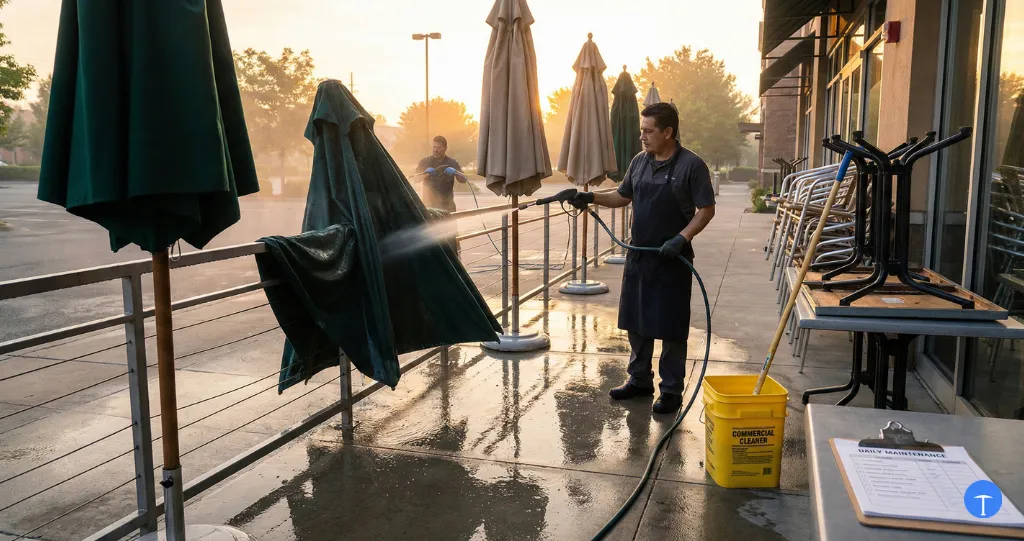
Commercial patio umbrella maintenance comes down to three priorities: close during wind events, clean weekly with mild soap and water, and inspect hardware monthly. Commercial patio umbrellas last 4 to 6 years with proper care, but neglect cuts that in half. The single biggest maintenance mistake is leaving umbrellas open during storms, which causes more commercial umbrella damage than any other factor.
Assign umbrella opening and closing to specific trained staff. Never force a push up lift or yank a pulley rope. Each morning, run a 30 second visual check: look for torn panels, bent ribs, loose rib tips, or a stiff mechanism. Catching problems at this stage takes seconds. Ignoring them turns a $30 rib fix into a $400 canopy replacement when that loose rib flaps in wind all afternoon.
Close all umbrellas at end of business and whenever wind exceeds 20 to 25 mph. Position vented canopies facing the prevailing wind for stability. Never leave umbrellas open overnight. Spot clean bird droppings, tree sap, or food spills immediately since these stains set into fabric fast.
Spray the entire umbrella with a garden hose to remove dust and debris. Mix mild soap with lukewarm water under 100 degrees Fahrenheit, apply with a soft bristle brush, let it sit a few minutes, then rinse thoroughly. Air dry completely with the canopy open since folding damp fabric creates conditions for mold. Wipe down the base, rinse, and dry. For detailed stain removal, see our patio umbrella cleaning guide.
Assign this to a manager. It takes 5 to 10 minutes per umbrella. Check rib hinge pins for looseness or corrosion. Inspect the hub for cracks or play. Test the lift mechanism for smooth operation. For pulley systems, check rope for fraying. Inspect canopy attachment points at rib tips for tearing. Check the pole for dents or finish damage. Tighten loose bolts with stainless steel replacements. Check bases for cracks or rust, and verify in ground sleeves are clear of water. Knowing umbrella parts helps your team communicate problems when ordering replacements.
Wash with mild soap and water. For mold or mildew, use a diluted bleach solution (one cup bleach plus one quarter cup mild soap per gallon of water). Rinse thoroughly, air dry completely, and reapply fabric protector spray annually. This fabric is central to what makes an umbrella commercial grade.
Mild soap and water only. Avoid bleach on colored polyester. Canopy lifespan runs 1 to 2 years in commercial use, so factor this into your umbrella cost planning.
Mild soap and water. Avoid chlorine bleach. Olefin resists moisture well but fades faster than solution dyed acrylic under sustained UV exposure.
Wipe with mild soap and soft cloth, polish dry to prevent water spots. Avoid abrasive cleaners that scratch anodized or powder coated finishes.
Clean with mild soap, dry thoroughly and immediately. Inspect for rust at joints and welds monthly. Touch up powder coat scratches right away to prevent rust spread.
Clean with mild soap and soft cloth, dry immediately. Teak can develop a natural grey patina or be maintained with periodic teak oil. Other hardwoods benefit from annual oiling to prevent cracking. Never pressure wash any frame material since the force strips finishes, drives moisture into joints, and bends thin components.
| Frequency | Task | Who | Time Per Umbrella | Tools Needed |
|---|---|---|---|---|
| Daily | Visual inspection when opening | Assigned staff | 30 seconds | None |
| Daily | Close at end of business or during wind | Assigned staff | 1 minute | None |
| Daily | Spot clean spills, droppings, sap | Any staff | 2 to 5 minutes | Damp cloth, mild soap |
| Weekly | Full hose down and soap wash of canopy and frame | Assigned staff | 10 to 15 minutes | Garden hose, mild soap, soft brush, dry cloth |
| Weekly | Wipe down base | Assigned staff | 3 to 5 minutes | Soapy sponge, dry cloth |
| Monthly | Hardware inspection (ribs, hub, mechanism, bolts) | Manager or supervisor | 5 to 10 minutes | Screwdriver, pliers, replacement bolts |
| Monthly | Mechanism function test | Manager or supervisor | 2 minutes | None |
| Seasonal (spring) | Full inspection, deep clean, parts replacement | Manager or supervisor | 30 to 45 minutes | Full cleaning supplies, replacement parts |
| Seasonal (fall) | Deep clean, dry completely, cover, store | Manager or supervisor | 30 to 45 minutes | Full cleaning supplies, breathable cover |
| Annual | Fabric protector spray application | Manager or supervisor | 15 to 20 minutes | Fabric protector spray, clean dry canopy |
Every umbrella gets a full inspection before first use. Deep clean canopy and frame. Check for pest damage if stored over winter since mice chew through fabric and rope pulleys. Test all mechanisms and replace worn parts before the season starts.
Deep clean before storage. The canopy must be completely dry since storing damp fabric guarantees mold. Close to deadlock position, apply a breathable cover, and store upright in a dry, temperature stable space. Avoid attics or uninsulated sheds. For year round use in mild climates, perform seasonal inspections every three months.
Close all umbrellas when wind hits or is forecast to reach 25 mph, even if your umbrella is rated higher. If you operate in a windy location, build this into daily operations. For severe storms, remove umbrellas from bases entirely. After any storm, inspect every unit before reopening. An umbrella blown into a guest or vehicle creates significant liability. The differences between commercial and residential models include wind ratings, but no rating replaces the judgment to close.
| Component | Signs It Needs Replacement | Typical Cost | DIY or Professional | Impact if Ignored |
|---|---|---|---|---|
| Canopy | Severe fading, thin spots, persistent mold, tears, lost water repellency | $150 to $400 | DIY (most snap or tie on) | UV protection loss, unprofessional appearance, guest complaints |
| Individual Rib | Permanent bend, cracked hinge, splintered fiberglass | $30 to $80 | DIY to moderate (may need tools) | Canopy sag, uneven shade, progressive frame damage |
| Pulley Rope | Fraying, stiffness, difficulty raising canopy | $15 to $40 | DIY | Rope snaps mid operation, canopy drops on guests |
| Lift Mechanism | Grinding, sticking, does not lock securely | $50 to $150 | Professional recommended | Canopy collapses unexpectedly, safety hazard |
| Hub Assembly | Cracks, excessive play, corrosion at rib connections | $60 to $120 | Professional recommended | Multiple ribs fail simultaneously |
| Base | Cracks in cast iron, severe rust on steel, shifting in ground mount | $80 to $300 | DIY for freestanding, professional for in ground | Umbrella tips over in wind, liability risk |
| Entire Umbrella | Pole bent or cracked, multiple structural failures, parts unavailable | $500 to $2,000 plus | Professional for large units | Total failure, potential injury, brand damage |
Replace the whole umbrella when the pole is bent, the hub has structural corrosion, parts are unavailable, or total repair cost exceeds 60 percent of a new unit. Otherwise, component repair is the smarter financial move.
Train every staff member who handles umbrellas on the correct procedure for your mechanism type. Post a one page checklist near umbrella storage covering daily inspection points, weekly cleaning, and the wind speed threshold for closing. Assign one manager ownership of monthly inspections and document every component replacement to support warranty claims and budget planning.
Weekly hose down with mild soap and water is the standard for commercial umbrellas in regular use. Spot clean bird droppings, food spills, and tree sap immediately, and deep clean at the start and end of each outdoor season.
With proper maintenance, commercial grade patio umbrellas last 4 to 6 years in daily use. The canopy usually needs replacement first (every 2 to 4 years depending on UV exposure), while the frame lasts significantly longer if kept clean and corrosion free.
Yes. Close commercial umbrellas at end of business and anytime they are not actively providing shade. Leaving them open overnight exposes them to wind stress, moisture, and UV degradation that shortens lifespan.
No. Pressure washing strips finishes, forces moisture into joints, and damages canopy fabric by driving dirt deeper or creating micro tears. Use a garden hose with a soft brush and mild soap.
Replace when the pole is bent or cracked, the hub has structural corrosion, parts are unavailable from the manufacturer, or total repair cost exceeds 60 percent of a new umbrella. If only the canopy or a rib needs replacing, repair is almost always better.
Every month you extend a commercial umbrella’s life is money that stays in your budget. The businesses that get 5 to 6 years from their commercial patio umbrellas do the basics consistently. Close when it’s windy. Clean before grime sets in. Inspect before small problems become structural failures. Replace parts before they take the whole unit down.