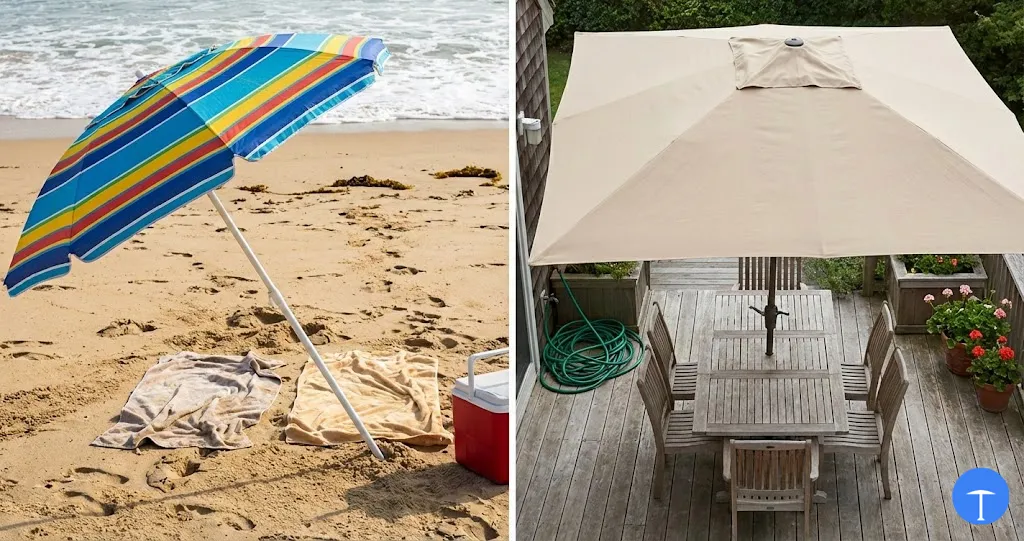
Beach umbrellas and patio umbrellas serve the same basic purpose, but they solve very different problems. Understanding the difference between beach and patio umbrellas comes down to one question: are you moving to the shade, or is the shade staying put?
Disclaimer: We are not certified security specialists; use this information at your own risk. Images are for illustrative purposes only, and the amounts listed are approximate. When you request a quote through our website, we may receive compensation. Learn more ›
A beach umbrella assumes you will transport it, often by hand, sometimes a considerable distance. Every design decision prioritizes portability. You need to carry it across hot sand, set it up without tools, and pack it back into your car.
A patio umbrella assumes it will live in one spot for an entire season. Manufacturers can add weight, use heavier materials, and create larger canopies because nobody needs to carry it anywhere.
This fundamental split explains nearly every other difference in the outdoor umbrella comparison. When deciding between a beach umbrella or patio umbrella, the first question is always about mobility.
Beach umbrella poles are typically made from lightweight aluminum or fiberglass. The pole usually comes in two pieces for easier transport, with a pointed bottom designed to push directly into sand.
Patio umbrella poles use heavier materials including wood, steel, and thick gauge aluminum. The parts of a patio umbrella include a straight pole that slides into a stand or table hole. A weighted base provides all the stability rather than ground penetration.
The ribs that support the canopy also differ. Beach umbrellas use fewer, lighter ribs. Patio umbrellas often feature eight or more ribs made from stronger materials to support larger canopy spans.
Beach umbrella fabric prioritizes UV blocking and quick drying over longevity. Most use polyester treated with silver coating or specialized fabric that blocks harmful rays. The fabric tends to be thinner and lighter.
Patio umbrella canopies use heavier solution dyed acrylic or polyester built to withstand months of continuous sun exposure. Premium market umbrellas often use Sunbrella or similar fabrics rated for years of outdoor use.
Beach umbrellas typically range from 6 to 8 feet in diameter. Anything larger becomes impractical to carry and difficult to anchor. The sweet spot for most beach goers falls around 7 feet.
Patio umbrellas start around 6 feet for small bistro tables and extend up to 13 feet for cantilever designs. A standard patio table umbrella runs 9 to 11 feet across.
Beach umbrellas generally offer superior UV protection because that is their primary job. Quality beach umbrellas carry UPF ratings of 50 or higher, blocking at least 98% of harmful UV rays. The Skin Cancer Foundation recommends UPF 30 or higher for effective sun protection.
Patio umbrellas provide shade but do not always include UPF ratings. The focus shifts toward aesthetics like color and pattern rather than maximum UV blocking. Some premium fabrics offer excellent protection, but you need to check specifications.
Understanding what makes a good beach umbrella includes recognizing that UV protection should be a measurable specification rather than a marketing claim.
Beach umbrellas rely on sand anchors to stay in place. The simplest designs feature a pointed pole you twist into the sand. Better options include screw anchors that spiral deep for improved holding power.
Learning how to anchor a beach umbrella in sand properly makes a significant difference in stability. The anchoring system is lightweight by necessity, which limits overall wind resistance.
Patio umbrellas use weighted bases ranging from 30 pounds to over 100 pounds. Knowing what size umbrella base you need depends on the umbrella diameter and local wind conditions.
The base does all the stability work, providing far more holding power than any sand anchor. This system only works on solid surfaces like patios, decks, or lawns.
A typical beach umbrella weighs between 3 and 10 pounds including any carry bag. You can sling it over your shoulder while managing coolers, chairs, and other beach gear.
A patio umbrella and base combination easily weighs 50 to 150 pounds total. Moving it requires planning and possibly a second person. This weight difference reflects completely different use cases rather than a design flaw.
Neither umbrella type loves wind, but they handle it differently. Beach umbrellas designed for windy conditions feature vented canopies and flexible poles that bend rather than break. The best beach umbrella for wind combines these features with a quality anchor system.
Patio umbrellas rely on heavy bases and robust construction to stand up to wind. Most should be closed when winds exceed 20 to 25 miles per hour. Check wind ratings before purchasing if you live in a breezy area.
| Feature | Beach Umbrella | Patio Umbrella | Best For |
|---|---|---|---|
| Typical size range | 6 to 8 feet | 6 to 13 feet | Patio for coverage |
| Weight | 3 to 10 lbs | 15 to 30 lbs (plus base) | Beach for transport |
| Portability | Excellent | Poor | Beach by far |
| UV protection | UPF 50+ common | Varies widely | Beach for guaranteed UV blocking |
| Anchoring method | Sand anchor | Weighted base | Patio for stability |
| Wind resistance | Moderate | Good with proper base | Patio overall |
| Tilt options | Push button or none | Crank and auto tilt | Patio for adjustment |
| Price range | $30 to $150 | $100 to $1000+ | Beach for budget |
| Durability | 2 to 5 seasons | 5 to 15 years | Patio for longevity |
| Best use case | Beach, parks, events | Patios, decks, yards | Match to your location |
Using a beach umbrella in your backyard works in specific situations. If you need portable shade that moves around the yard, a beach umbrella offers flexibility a fixed patio umbrella cannot match.
The challenge is stability. Without sand to anchor into, you need a beach umbrella stand or heavy base. Some people fill a bucket with sand or concrete, but this eliminates the portability advantage.
Taking a patio umbrella to the beach rarely works well. The weight makes transport impractical, and the straight pole will not push into sand effectively. You would need to bring the heavy base too.
The only scenario where this makes sense is beachfront property where the umbrella lives permanently near the shore. Even then, salt air will shorten the lifespan considerably.
Yes, but you will need a compatible stand or weighted base since the pointed pole is designed for sand. Beach umbrellas work well for temporary shade on patios, especially for renters or anyone who wants flexibility to move the umbrella around.
This is impractical for most people. The weight makes transport difficult, and the pole design does not work with sand anchoring. You would need to bring the heavy base, which adds more weight and still may not provide adequate stability in sand.
Beach umbrellas typically offer better guaranteed UV protection with UPF ratings of 50 or higher. Patio umbrellas vary widely, and many do not list UV specifications at all. Check for specific UPF ratings if UV blocking matters to your decision.
Patio umbrellas with proper weighted bases generally handle wind better due to their heavier construction and stable anchoring. However, quality beach umbrellas with good anchors can handle moderate beach breezes effectively.
Only if you actually use both settings regularly. Many households get by with just one type matched to their primary use. If you visit the beach a few times per year and have a patio you use daily, invest in a quality patio umbrella and rent or borrow a beach umbrella when needed.
Choose a beach umbrella if you need to carry your shade to different locations throughout the season. Beach days, picnics, sporting events, and backyard activities where shade needs change all favor the portable option.
Choose a patio umbrella if you have a dedicated outdoor space where the umbrella will live most of the time. The larger coverage, better durability, and greater stability justify the higher investment for daily use.
The outdoor umbrella comparison ultimately comes down to matching the tool to the job. Neither type is universally better. They excel at different tasks by design. Pick the one that fits how you actually spend time outdoors, and it will serve you well for years. For more outdoor shade solutions, explore our complete patio umbrella guides.