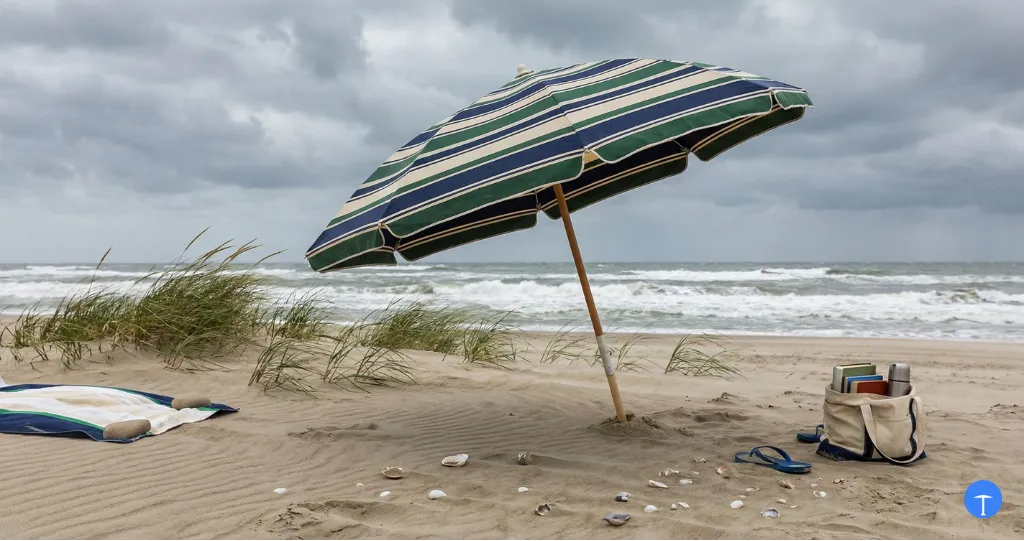
The best beach umbrella for wind combines vented canopy design, flexible fiberglass ribs, and a strong anchor system to handle coastal gusts without taking flight. While no umbrella is truly windproof, certain features dramatically improve stability when conditions get breezy.
Beaches create demanding conditions for any umbrella. Unlike your backyard where buildings and trees break up wind patterns, the shoreline offers zero protection. Gusts travel uninterrupted across miles of water before hitting your umbrella with full force.
Coastal wind also changes direction constantly. The National Weather Service notes that open coastal areas experience some of the highest wind exposure. Your umbrella has to handle unpredictable movement rather than steady pressure from one direction. Add in the fact that you’re anchoring into sand rather than a solid surface, and you understand why so many beach umbrellas end up tumbling across the sand.
Not all features contribute equally to wind resistance. Here’s how the main design elements perform when coastal gusts arrive.
| Feature | Wind Benefit | How It Works | Look For |
|---|---|---|---|
| Vented canopy | Releases pressure buildup | Air escapes through openings rather than lifting canopy | Double layer vents near canopy top |
| Fiberglass ribs | Flexes without breaking | Bends with gusts then returns to shape | 8 ribs minimum, fiberglass not steel |
| Strong anchor system | Prevents uprooting | Grips sand at depth to resist pull | Screw style anchor, not spike |
| Smaller canopy size | Catches less wind | Reduced surface area means less force | 6 to 7 foot canopy for windy beaches |
| Low profile design | Less leverage for gusts | Shorter pole reduces torque on anchor | Adjustable height, use lowest setting |
| Tilting mechanism | Deflects direct gusts | Angles canopy to let wind slide over | Push button tilt, not collar style |
A vented beach umbrella uses a double layer canopy with openings that allow air to pass through rather than building up underneath. When wind hits a solid canopy, pressure accumulates until the umbrella either lifts off or inverts. Vents release this pressure before it becomes a problem.
The most effective designs place openings near the top of the canopy where pressure is highest. For serious wind resistance, look for umbrellas specifically marketed as vented rather than those where gaps simply exist due to loose construction.
If you want to understand how vented designs work in more detail, the principles apply whether you’re dealing with a beach umbrella or patio umbrella.
The ribs supporting your canopy determine whether your umbrella survives a strong gust or ends up bent and broken. Rigid steel ribs resist initial wind force but tend to snap when pushed past their limits. Fiberglass ribs flex with the wind, absorbing energy and returning to their original shape once the gust passes.
This flexibility matters because beach gusts are unpredictable. A sudden 30 mph gust might only last seconds, but that’s enough to destroy rigid ribs. Count the ribs when evaluating umbrellas. Eight ribs provides a good balance for beach use, though some heavy duty beach umbrellas use ten or more.
Your umbrella’s wind resistance ultimately depends on what holds it in the ground. The most wind resistant canopy won’t help if your anchor pulls free from the sand.
Sand anchoring requires depth and surface area. Simple spike anchors rely only on friction against sand particles, providing minimal holding power. Screw style anchors create a much larger contact area and resist both vertical pull and rotational forces from shifting wind direction.
Getting your anchor properly set in sand matters as much as having quality equipment. Even the best anchor fails if it’s not buried deeply enough.
Bigger isn’t better when wind is a concern. A larger canopy catches more wind, creating greater force on your anchor system and pole. A smaller umbrella will almost always be more stable than a larger one in identical conditions.
For a windy beach, consider a 6 foot umbrella that provides adequate shade for one or two people while presenting far less surface area to gusts. If you need coverage for a larger group, bringing two smaller umbrellas often works better than one large umbrella on windy days.
The pole connecting your canopy to your anchor handles tremendous stress in windy conditions. Thin poles flex excessively, making it harder for your umbrella to maintain position.
Look for poles with at least 1.5 inch diameter for serious wind resistance. Two piece poles should have secure locking mechanisms that won’t vibrate loose in sustained wind. Aluminum and fiberglass poles resist corrosion better than steel in the salt air environment.
Understanding what makes a good beach umbrella overall helps you evaluate how pole construction fits with other quality indicators.
A good tilting mechanism lets you position your canopy to deflect wind rather than catching it directly. Tilting your canopy to present a sloped surface lets wind slide over rather than push against flat fabric.
Collar style tilts that rely on friction often slip when stressed by gusts. Push button tilts with positive locking typically maintain position better under wind load. A slight angle toward the wind reduces lift significantly compared to a perfectly flat canopy.
Understanding realistic wind limits helps you decide when to close your umbrella for safety.
| Umbrella Quality | Typical Wind Tolerance | With Proper Anchoring | Notes |
|---|---|---|---|
| Budget beach umbrella | 10 to 12 mph | 15 mph maximum | Usually first to fail, often lack vents |
| Mid range beach umbrella | 15 to 18 mph | 20 to 22 mph | Adequate for typical beach days |
| Premium beach umbrella | 20 to 25 mph | 28 to 30 mph | Best consumer grade options |
| Commercial beach umbrella | 25 to 30 mph | 35 mph maximum | Heavy, expensive, rental quality |
These figures assume proper setup on firm, moist sand. Wind gusts exceed sustained speeds, so a day with 15 mph sustained winds includes gusts pushing 25 mph or higher.
The correlation between price and wind performance generally holds true.
Maximum wind resistance comes from combining multiple features rather than relying on any single element. The ideal setup includes a vented canopy supported by fiberglass ribs, mounted on a sturdy pole with a locking tilt mechanism, secured by a screw style sand anchor buried to proper depth.
Each element supports the others. Vents reduce pressure so your anchor bears less load. Flexible ribs absorb sudden gusts so your pole doesn’t snap. Understanding what makes an umbrella windproof helps you evaluate whether a specific beach umbrella delivers on wind resistance claims.
Manufacturers love touting wind resistance, but claims vary wildly. Specific mph ratings deserve skepticism unless testing methodology is explained. Did they test in sustained wind or brief gusts? Was the umbrella properly anchored?
Terms like “windproof beach umbrella” are marketing language. No beach umbrella is truly windproof. Look for specific feature descriptions rather than relying on broad claims.
General wind tolerance information for umbrellas applies to beach models, though beach umbrellas typically handle somewhat less wind due to anchoring limitations.
Certain design elements signal an umbrella that will struggle in wind. Solid canopies without venting catch every gust. Small diameter poles and thin ribs lack structural strength. Spike style anchors provide minimal holding power in sand.
Canopy fabric tightness also matters for wind performance. Loose canopy fabric that flaps in light breeze catches far more wind than taut material stretched firmly across the frame. When shopping, check that the fabric sits snugly without sagging or rippling.
Budget umbrellas often combine multiple weakness factors. The low price comes from cheaper materials that can’t match the wind resistance of better designed options.
The most wind resistant design combines a vented canopy, fiberglass ribs, and a screw style sand anchor. These elements work together to release wind pressure, absorb gust energy, and maintain secure anchoring.
No beach umbrella handles truly strong wind safely. Even premium models should come down when sustained winds exceed 25 to 30 mph or when gusts feel dangerous. A beach umbrella blowing away creates hazards for other beachgoers.
Larger canopies catch more wind and create greater force on your anchor system. A 6 foot canopy handles coastal wind significantly better than an 8 foot canopy.
Vented beach umbrellas outperform solid canopies by releasing pressure that would otherwise lift or invert the umbrella. The vents allow air to escape rather than building up underneath.
Budget umbrellas typically handle 10 to 15 mph while premium models can manage 25 to 30 mph with proper anchoring. All umbrellas should come down when gusts feel unsafe.
Selecting the best beach umbrella for wind means prioritizing features that contribute to stability. Start with a vented canopy, verify fiberglass rib construction, and invest in a quality sand anchor. Browse our complete patio umbrella guide to compare options across different umbrella types.
Beach umbrellas differ from patio umbrellas primarily due to anchoring differences. Whatever you choose, a smaller wind resistant umbrella that stays in place all day beats a larger umbrella that takes flight when conditions change.