A properly anchored beach umbrella stays put when wind picks up and protects your family from runaway canopies. The key is getting your anchor deep enough, usually 18 to 24 inches minimum, and angling the umbrella into the wind. Most beach umbrella failures come down to rushing the setup or using the wrong technique for the sand conditions.
Beach umbrellas become dangerous projectiles in wind. A seven foot canopy catching a gust can pull free and fly across a crowded beach at surprising speed. The U.S. Consumer Product Safety Commission has documented serious injuries from windblown umbrellas, making proper anchoring a genuine safety concern rather than just a convenience issue.
Beyond safety, poor anchoring means constant babysitting instead of enjoying the water. Wind is the obvious enemy, but sand itself works against you. Dry, loose sand has almost no holding power. The grains shift around your anchor, gradually loosening the grip until a moderate breeze finishes the job. When choosing a quality beach umbrella, the anchor system matters as much as the canopy.
Not all beach umbrella anchors work the same way. Your choice depends on your umbrella, typical beach conditions, and how much gear you want to carry. Understanding the options helps you pick the right patio and beach umbrella solution for your needs.
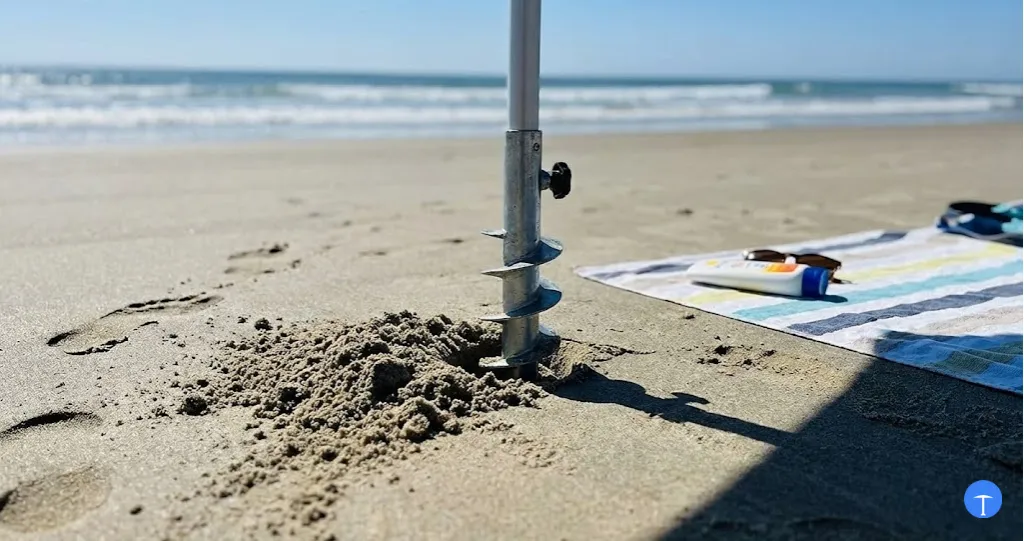
Most quality beach umbrellas now include screw anchors integrated into the pole. These spiral designs twist into sand like a corkscrew, creating mechanical grip. The convenience factor is significant since there is nothing extra to carry. Their main limitation is depth, as most reach 12 to 18 inches.
Aftermarket sand anchors are standalone devices that accept your umbrella pole. These tend to have larger screw designs reaching 24 to 30 inches deep. Some also work for patio umbrellas at the beach, giving you flexibility with different umbrella styles.
Sand bags attach to the umbrella pole and add downward weight to resist lift. They work as supplements rather than primary anchors. Fill them at the beach, drape over the pole base, and they add 15 to 30 pounds of holding force.
| Anchor Type | How It Works | Best For | Limitations | Ease of Use |
|---|---|---|---|---|
| Built in screw anchor | Spiral design twists into sand creating mechanical grip | Daily beach use in typical conditions | Limited depth, usually 12 to 18 inches | Excellent, nothing extra to carry |
| Separate screw anchor | Larger auger accepts pole, reaches deeper | Soft sand, windy beaches, heavy use | Extra gear to transport | Good, adds one setup step |
| Sand spike or stake | Straight pole drives into sand | Packed sand, calm conditions | Poor grip in loose sand, shallow depth | Very easy but unreliable |
| Sand bag weights | Adds downward force to pole base | Supplementing other anchors | Cannot replace proper anchoring | Easy, fill at beach |
| Combination systems | Screw anchor plus weight bags | Challenging conditions, maximum security | Cost, complexity | Moderate, multiple steps |
Proper technique makes the difference between an umbrella that stays put and one that becomes a nuisance.
Push your hand into the sand to check if it feels loose or packed. Dig a small hole to check density at depth since surface conditions often differ from sand 12 inches down. Look for sand that has settled and compacted slightly away from the high tide line.
Shells, rocks, and debris interfere with anchoring. A rock at eight inches can stop your screw cold. Clear a two foot circle and dig out anything that might cause problems.
Face the umbrella canopy into the wind before anchoring. Lean the pole slightly into the wind, roughly 10 to 15 degrees from vertical. This angle means wind pushes the umbrella toward the sand rather than trying to lift it out.
For screw anchors, grip the pole and twist clockwise while pushing down. Keep the pole straight as you rotate. Continue until you reach 18 to 24 inches deep or hit solid resistance.
Push the pole firmly in all directions. It should flex slightly at the top but remain solidly planted at the base. If the base wobbles, pack wet sand around the pole and test again before leaving the umbrella unattended.
Depth is the single most important factor in beach umbrella stability. The minimum for reliable holding is 18 inches in favorable conditions. For soft sand or strong wind, 24 inches is the realistic target.
| Sand Condition | Minimum Depth | Recommended Depth | Notes |
|---|---|---|---|
| Soft dry sand | 20 inches | 24+ inches | May need supplemental weight bags |
| Packed sand | 18 inches | 20 inches | Best anchoring conditions |
| Wet sand near water | 18 inches | 20 inches | Good grip but watch tide movement |
| Mixed conditions | 20 inches | 24 inches | Test thoroughly, adjust as needed |
Soft sand is the biggest challenge. Dig a pilot hole eight to ten inches deep to find firmer, damper sand below the surface. Position your umbrella in this excavated area so your anchor immediately enters better material.
Packed sand is ideal for anchoring. The compressed grains grip your screw anchor effectively. If you hit resistance before adequate depth, try a slightly different location rather than forcing it.
Wet sand grips well but consider tide movement. Position in sand that is damp but not saturated, just above where high tide waves reach.
Wind changes throughout the day. After anchoring, set your canopy tilt so wind flows over the top. Tilt into the wind so the canopy acts like a wing rather than a parachute.
Check your umbrella hourly, especially when wind shifts. For beaches with consistently strong wind, consider umbrellas designed for wind with vented canopies. Review wind guidelines to know when closing is the safer choice.
Usually insufficient depth is the culprit. Pull the anchor and check actual depth against the 18 to 24 inch recommendation. Sand conditions may also have changed as the day warmed, or wind direction shifted significantly.
You have hit hard packed sand or an obstacle. Move your setup a few feet and try again. Beach sand varies enough that a nearby spot may be completely different.
Combine multiple approaches when soft sand defeats your efforts. Dig to find firmer sand, go as deep as possible, pack wet sand around the pole, and add weight bags. In extreme cases, closing may be necessary since strong wind plus very soft sand exceeds what any beach umbrella can handle safely.
Your beach umbrella anchor should reach at least 18 to 24 inches deep in typical sand conditions. In soft, dry sand, aim for the full 24 inches or deeper. Packed sand may allow you to get away with 18 inches, but deeper is always more stable.
The most common reasons are insufficient depth, loose sand around the pole, or not angling the umbrella into the wind. Make sure your anchor reaches at least 18 inches deep, pack sand firmly around the base, and tilt the canopy so wind passes over rather than catching underneath.
Yes, always angle your beach umbrella so the canopy tilts into the wind direction. This allows wind to flow over the top rather than catching underneath and creating lift. Adjust the tilt throughout the day as wind direction changes.
It depends on your umbrella and conditions. Quality beach umbrellas with built in screw anchors work well in most situations. If you frequently visit beaches with very soft sand or deal with strong winds, a separate heavy duty sand anchor provides extra security.
In very soft sand, dig down until you reach firmer, damper sand below the surface. Use a screw anchor rather than a spike, go as deep as possible, and pack wet sand around the base. Consider adding sand bags on the pole for extra weight.
An improperly anchored umbrella is genuinely dangerous. A seven foot canopy in 25 mph wind becomes a spinning projectile. The American Red Cross beach safety guidelines emphasize securing all beach equipment, and umbrellas deserve special attention given their size and wind exposure.
Never leave an umbrella unattended in gusty conditions. Either close it or ensure someone stays nearby. When anchoring alone, brace your feet wide and use body weight to keep the pole vertical while you rotate. Take breaks rather than rushing and creating a weak installation.
Assess sand condition before choosing your spot. Clear debris from a two foot circle. Position umbrella facing into the wind. Drive anchor to at least 18 inches, preferably 24 in soft sand. Keep pole straight during installation. Test stability by pushing firmly in all directions. Pack sand around base if any wobble detected. Adjust canopy tilt into wind direction. Check and readjust throughout the day. Close umbrella when wind picks up or leaving unattended.
A minute of proper setup saves hours of frustration. Get the anchor deep, angle into the wind, and your umbrella will be there waiting exactly where you left it.