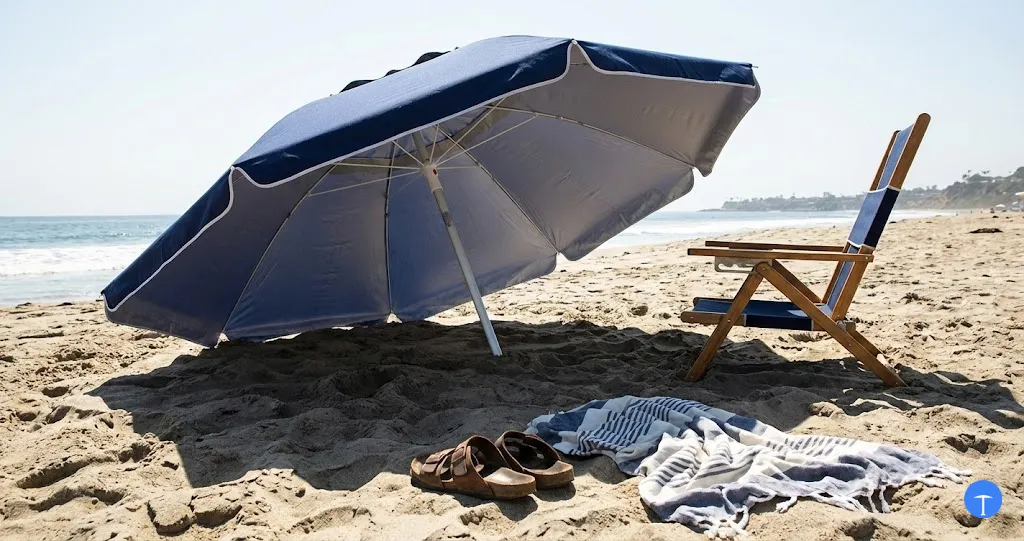
A good beach umbrella comes down to four essential qualities: adequate UV protection with a UPF 50+ rating, a sturdy anchor system that holds in sand, durable materials that resist salt and wind, and enough portability that you actually bring it to the beach. Everything else builds on these fundamentals.
The difference between a beach umbrella that lasts one season and one that serves you for years comes down to construction details most shoppers overlook. Understanding what separates quality from marketing hype helps you invest wisely and stay protected.
Walk into any store during summer and you will find dozens of beach umbrellas ranging from twenty dollars to over two hundred. The price tags vary wildly, but knowing which features justify the cost separates smart purchases from expensive mistakes.
Your umbrella needs to handle three challenges simultaneously: blocking harmful UV rays, staying planted in loose sand while gusts whip through, and surviving exposure to salt air and intense sunlight day after day. Every design choice should address at least one of these demands.
Marketing often emphasizes flashy patterns while glossing over engineering underneath. Fabric density, pole construction, and anchor design determine whether your umbrella becomes a beach staple or windblown garbage by August.
UPF stands for Ultraviolet Protection Factor, and it measures how much UV radiation a fabric blocks. A UPF 50 rating means only 1/50th of the sun’s UV rays pass through, blocking 98% of harmful radiation. The Skin Cancer Foundation recommends UPF 30 as the minimum for adequate sun protection.
| UPF Rating | UV Block Percentage | Protection Level | Recommendation |
|---|---|---|---|
| UPF 15-24 | 93.3% - 95.9% | Good | Minimum acceptable |
| UPF 25-39 | 96% - 97.4% | Very Good | Suitable for moderate exposure |
| UPF 40-49 | 97.5% - 97.9% | Excellent | Recommended for extended use |
| UPF 50+ | 98%+ | Maximum | Best for all-day beach protection |
Look for UPF 50+ when shopping. Cheaper umbrellas often claim UPF ratings without third-party testing, so look for certification from recognized laboratories.
SPF measures sunscreen effectiveness on skin, while UPF measures fabric protection. They use different testing methods and cannot be compared directly. Your beach umbrella’s UPF rating remains constant whether wet or dry, unlike sunscreen which degrades with sweat and water.
The canopy material affects UV protection, weight, durability, and price. Four main fabric types dominate the beach umbrella market.
Polyester is most common, offering good UV resistance, water repellency, and affordability. Quality polyester uses tight-weave construction with UV stabilizers that prevent fabric degradation from sun exposure.
Nylon weighs less but costs more for equivalent durability. It resists tearing and dries quickly, making it popular for premium travel umbrellas.
Acrylic fabric like Sunbrella offers superior fade resistance. The solution-dyed fibers hold color all the way through rather than just on the surface, resisting the bleaching effect of intense sunlight.
Silver or white coatings on the underside reflect heat away from the shaded area. This feature can reduce temperatures underneath by several degrees compared to standard fabrics.
Vented canopies include openings near the top that allow wind to pass through rather than catching the fabric like a sail. This design dramatically improves stability on breezy beaches by reducing the lift force that pulls anchors out of sand. Look for double-vented designs on umbrellas marketed for windy conditions. The tradeoff is slightly less shade directly beneath the vent, though this gap is typically small enough to be negligible for UV protection.
Beach umbrellas typically range from six to eight feet in diameter. A seven-foot diameter creates roughly 38 square feet of shade, enough for two adults and gear. Larger canopies catch more wind and require stronger anchor systems.
| Material | Weight | Durability | Corrosion Resistance | Price | Best For |
|---|---|---|---|---|---|
| Steel | Heavy | Excellent | Poor without coating | Low | Budget options, calm conditions |
| Aluminum | Light | Good | Excellent | Medium | All-around beach use |
| Fiberglass | Light | Very Good | Excellent | High | Windy beaches, frequent travel |
| Wood | Heavy | Good | Moderate | Varies | Classic aesthetic, mild conditions |
Aluminum poles offer the best balance for most beach users, resisting salt corrosion naturally while staying lightweight. Fiberglass poles flex under wind stress rather than bending permanently, making them ideal for exposed coastal locations.
The anchor determines whether your umbrella stays put or becomes a dangerous projectile. Learning how to anchor properly matters as much as the anchor design itself.
Integrated screw anchors twist into sand like corkscrews, creating holding power through friction along the buried length. This design provides the most reliable hold in loose beach sand.
Fabric pockets around the base that you fill with sand add weight but rarely provide enough stability alone. Think of these as backup security rather than primary anchoring.
Simple spikes work reasonably well in firm wet sand but struggle in loose dry sand. They sacrifice holding power compared to screw designs.
As the sun moves across the sky, a fixed umbrella loses effectiveness. Tilt mechanisms let you adjust the canopy angle throughout the day to maintain shade coverage and block direct rays.
Push-button tilts are most common and allow quick angle changes at preset positions. Look for metal tilt housings rather than plastic, which can crack under sun exposure. The connection point between the pole and canopy takes significant stress during wind gusts, making material quality essential here.
Most quality beach umbrellas weigh between three and seven pounds, with the sweet spot around four to five pounds. Heavier construction usually means sturdier materials, while lighter models travel easier.
Look for cases with shoulder straps, reinforced ends, and ventilation panels. The case should fit snugly without excessive room that allows shifting.
Telescoping poles collapse for easier transport. Check that locking mechanisms feel solid since these joints bear weight and wind stress.
Salt air accelerates corrosion while sand works into joints and mechanisms. Beach umbrellas face harsher conditions than typical patio umbrellas encounter.
Look for stainless steel hardware and marine-grade components. Rinsing with fresh water after beach use extends lifespan significantly by removing salt crystals.
Rib count matters since more ribs distribute wind stress better. Eight ribs is standard while premium models often use ten or twelve. Examine stitching quality at seams and around the center hub. Double stitching indicates manufacturing care.
The parts of an umbrella that matter most are often hidden. Check reviews for mentions of specific component failures.
Expect to pay between $40 and $80 for a quality beach umbrella that balances durability with portability. Budget models under $30 typically cut corners on UV protection, anchor systems, or hardware quality. Premium options above $100 add features like carbon fiber poles or specialized venting that justify the cost for frequent beachgoers.
Look for UPF 50+ for maximum sun protection during extended beach exposure. This rating blocks 98% or more of UV radiation. Lower ratings like UPF 30 still provide good protection for occasional use.
Not necessarily. Modern lightweight materials like fiberglass and aluminum can outperform heavier steel in both durability and wind resistance. Focus on construction quality rather than weight alone.
Vented canopies help significantly in windy conditions by allowing air to pass through rather than catching like a sail. If you frequent breezy beaches, a vented design improves stability. For calm conditions, venting matters less.
Seven feet provides adequate shade for two adults. Choose eight feet for family coverage or extra gear room. Consider your typical beach conditions and transport situation.
A quality beach umbrella should last three to five years with regular use and proper care. Rinse after each trip and store dry. Premium options can last a decade with careful maintenance.
Certain red flags indicate cheap construction regardless of price or marketing claims. Avoid umbrellas with thin wobbly poles since these will bend in moderate wind. Plastic tilt mechanisms crack under UV exposure and stress. Canopies without stated UPF ratings probably offer minimal protection.
Be skeptical of extremely light weights combined with large canopy sizes. The physics of wind stress require adequate pole strength and anchor holding power. An eight-foot umbrella weighing under three pounds likely sacrificed structural integrity somewhere.
Generic unbranded imports often copy the appearance of quality products without the materials or construction standards. Check reviews for durability feedback over multiple seasons to see whether an umbrella holds up to real beach use.
Prioritize UPF 50+ protection, quality pole materials like aluminum or fiberglass, and an integrated screw anchor system. These three features determine whether your umbrella protects you effectively and stays planted.
Investing in a quality beach umbrella pays off over multiple seasons. The difference between a disposable model and a durable umbrella shows up the first time you face a gusty afternoon or want reliable shade all day.