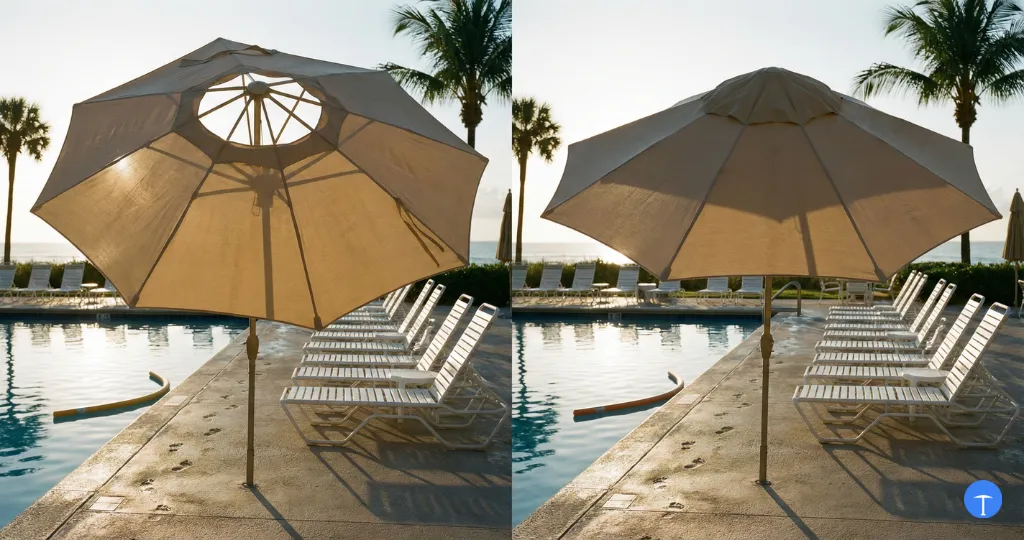
Vented umbrellas handle wind better than non vented designs by releasing trapped air through openings in the canopy. The difference is most noticeable in moderate winds between 10 and 20 mph, where a vented patio umbrella stays stable while a solid canopy catches gusts like a sail. That said, vents aren’t magic. They improve wind resistance but won’t turn any umbrella into a storm shelter.
Wind creates problems for patio umbrellas in two ways. Moving air pushes against the canopy fabric, creating direct pressure that tips the umbrella. Air also gets trapped underneath, building pressure that lifts or inverts the entire umbrella.
An umbrella wind vent addresses that second problem. The opening allows trapped air to escape upward rather than building pressure below. This canopy pressure release mechanism means that when a gust hits, air flows through the vent instead of pushing the umbrella from underneath.
Think of it like opening a window during a storm. Pressure equalizes rather than building until something gives way. This is why vented umbrellas feel noticeably more stable in gusty conditions. The canopy still experiences direct wind force, but without the added lift pressure, the umbrella stays planted more reliably.
| Vent Type | How It Works | Wind Benefit | Appearance | Common On |
|---|---|---|---|---|
| Single top vent | One opening at canopy peak with secondary fabric layer | Good pressure release | Subtle, barely visible | Market umbrellas |
| Double vent | Two stacked vent layers | Better airflow, more stability | More visible, tiered look | Premium market umbrellas |
| Valance vent | Openings around canopy edge under decorative valance | Moderate benefit | Hidden by valance | Traditional style umbrellas |
| Double tier canopy | Completely separate upper tier | Excellent airflow | Distinctive pagoda style | Specialty designs |
The most common design places a single vent at the canopy apex. A secondary fabric panel sits above the opening, preventing rain from falling through while allowing air to escape. This wind vent canopy style offers good performance without dramatically changing appearance.
A double vent umbrella stacks two vent openings, creating more airflow paths. The additional opening improves stability in stronger gusts. The tradeoff is a more layered look that some find attractive and others consider busy.
Some umbrellas hide vents around the canopy perimeter underneath a decorative valance. This umbrella air vent style lets air escape sideways rather than upward. While they help, valance vents typically offer less benefit than top vents because air naturally wants to rise.
Double tier umbrellas feature a separate smaller tier above the main shade surface. Air escapes freely between the two levels, providing excellent wind stability with a distinctive pagoda appearance. The parts of a patio umbrella differ significantly with this construction.
| Factor | Vented Umbrella | Non-Vented Umbrella | Winner |
|---|---|---|---|
| Wind stability | Better pressure release, less lift | More susceptible to gusts and inversion | Vented |
| Rain protection | Slight water entry possible in heavy rain | Complete coverage | Non-Vented |
| Shade coverage | Minimal reduction from vent area | Full canopy shade | Non-Vented (slight) |
| Appearance options | More limited styles | Wider variety | Non-Vented |
| Price range | $20-50 more typically | Lower starting prices | Non-Vented |
| Durability | Extra seams to maintain | Simpler construction | Tie |
| Maintenance | Vent fabric needs inspection | Straightforward care | Non-Vented (slight) |
Vents improve stability meaningfully but not dramatically. A vented patio umbrella might stay stable where a non vented version would wobble or need closing.
The improvement isn’t a simple percentage because base weight, pole thickness, canopy size, and fabric all affect stability alongside venting. What vents reliably do is eliminate lift pressure from trapped air.
For understanding how much wind patio umbrellas can withstand, vents might add 3 to 5 mph to your usable range. That margin often means the difference between leaving your umbrella open during gusty afternoons versus constant closing and reopening.
Umbrella vent effectiveness varies by conditions. Vents help most in moderate, gusty winds between 10 and 20 mph where pressure buildup causes problems.
In very light winds under 10 mph, non vented umbrellas perform fine because pressure doesn’t build significantly. In very high winds above 25 mph, vents help but can’t overcome raw force pushing against the canopy. At that point, close any umbrella regardless of vent design. Understanding what wind speed requires closing matters more than vents in serious weather.
The sweet spot for vented benefits is exactly the gusty but manageable conditions most people encounter: afternoon breezes, coastal winds, and variable conditions that make outdoor dining unpredictable.
Some water can come through vent openings during heavy downpours, but the amount is minimal for well designed vents. The secondary fabric panel deflects most precipitation outward. In light to moderate rain, you won’t notice any water entering. During heavy storms, small amounts might enter near the center, but most find this negligible.
Shade coverage changes slightly with vented designs. The vent opening doesn’t provide shade, but this area is small relative to total canopy. A 9 foot vented market umbrella provides essentially the same shade as non vented equivalents.
Non vented umbrellas offer more style variety simply because they’ve been around longer. Clean lines, solid colors, and pattern options abound. Vented umbrellas have a distinctive look that some prefer, though single vents appear quite subtle. For market umbrellas, both options exist across most style categories. Cantilever umbrellas less commonly feature vents because the offset pole already reduces some wind issues.
Vented umbrellas typically cost $20 to $50 more than comparable non vented models. The additional construction adds manufacturing costs.
Value depends entirely on your wind conditions. For someone in a sheltered courtyard, the premium buys little benefit. For exposed decks or coastal areas, the investment pays off in extended usability. Consider how often you’d close a non vented umbrella due to wind. Weekly? The vented version makes sense. A few times per season? Spend that money elsewhere.
Your location experiences regular afternoon breezes or gusty conditions. Open patios, poolside areas, elevated decks, coastal homes, and spots near large bodies of water all benefit from vented designs.
You might also prefer vents to leave your umbrella open more often without constant monitoring. For comprehensive wind protection, vents combine well with proper anchoring. Learning how to keep your patio umbrella from blowing away covers the full picture.
Your patio sits sheltered with buildings, fences, or landscaping blocking most wind. Enclosed courtyards, protected balconies, and spaces between structures rarely see conditions where vents matter.
Mild climates without significant winds don’t demand vented designs. Budget constraints or specific style requirements also point toward non vented options, with wider selection and lower prices.
Vents typically add 3 to 5 mph to your umbrella’s comfortable wind tolerance. The benefit comes from eliminating lift pressure rather than reducing direct force. In gusty conditions between 10 and 20 mph, this improvement is noticeable for extended outdoor use.
Minimal water enters through properly designed vents. The secondary fabric panel deflects most precipitation. During heavy storms, small amounts might enter near the center, but most users find this negligible.
Yes, typically $20 to $50 more than comparable non vented models. Whether this provides value depends on your location’s wind conditions.
No, vents require specific construction during manufacturing. The frame, fabric panels, and stitching need designing together. Cutting a hole in existing canopy would compromise structure and cause tearing.
Double vents provide better airflow in stronger winds but create a more visible layered appearance. For consistently windy locations, double vents offer worthwhile improvement. For occasional gusts, single vents provide sufficient benefit with subtler looks.
The choice comes down to your conditions and priorities. Vents provide real wind stability improvement that matters in gusty environments. They extend usable conditions noticeably without being miracle solutions.
If wind is a regular concern, investing in umbrella wind stability features is worth the modest premium. Combined with a proper base for windy conditions and understanding what makes an umbrella windproof, you’ll handle whatever breezes come your way.
For sheltered locations or mild climates, non vented umbrellas work perfectly well. Put those savings toward larger canopy, better fabric, or sturdier base instead.