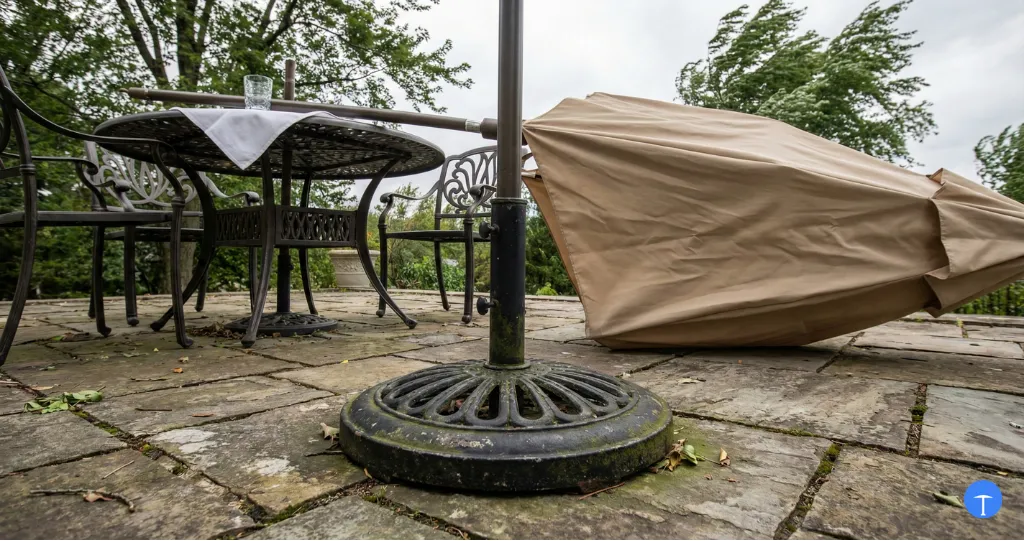
The best umbrella bases for windy areas are heavy freestanding models made from cast iron or concrete, typically weighing 50 pounds or more. For maximum stability, in-ground sleeve mounts and deck mounted umbrella plates eliminate tipping risk entirely by anchoring directly to your surface.
If you live somewhere the wind picks up regularly, your heavy duty umbrella base matters more than any other component. A quality umbrella paired with a flimsy stand will end up knocked over, damaged, or sailing into your neighbor’s yard. The right weighted umbrella base keeps everything planted exactly where you want it.
Wind creates leverage against your umbrella canopy. The taller and wider your umbrella, the more force transfers down the pole to the base. A base that works fine on calm days becomes dangerously inadequate when gusts hit 15 to 20 mph.
The physics work against you. Your umbrella acts like a sail, catching wind and multiplying force at the base. A 9 foot umbrella in moderate wind can generate enough torque to tip over a 30 pound base that seemed perfectly stable yesterday. Understanding how much wind patio umbrellas can actually withstand helps you appreciate why base selection deserves serious attention.
Most umbrella failures in wind come down to base problems, not umbrella problems. The canopy holds up fine. The pole stays straight. But the base tips, dragging everything down with it. Umbrella base tipping causes damage that could have been prevented with better anchoring.
| Base Type | Wind Resistance | Typical Weight | Portability | Best For | Price Range |
|---|---|---|---|---|---|
| Cast iron freestanding | Excellent | 50-75 lbs | Low | Permanent patio setups | $80-200 |
| Concrete freestanding | Excellent | 60-100 lbs | Very low | Heavy duty permanent use | $60-150 |
| Fillable (water) | Moderate | 35-50 lbs filled | High when empty | Renters, seasonal use | $30-80 |
| Fillable (sand) | Good | 50-75 lbs filled | Moderate when empty | Balance of weight and flexibility | $30-80 |
| In-ground sleeve | Superior | N/A (anchored) | None | Permanent installations | $40-100 |
| Deck mount plate | Superior | N/A (bolted) | None | Deck installations | $50-120 |
| Cantilever cross base | Good to excellent | 150-300 lbs total | Very low | Offset cantilever umbrellas | $100-400 |
| Rolling base with locks | Moderate to good | 50-100 lbs | High | Repositioning needs | $100-250 |
Cast iron and concrete umbrella bases rely on sheer mass to resist wind. They sit on your patio surface without any attachment, using weight alone to counteract the forces pushing against your umbrella.
A cast iron umbrella stand typically ranges from 50 to 75 pounds and features a low profile design that keeps the center of gravity close to the ground. The material resists rust when properly coated and lasts for decades. A concrete umbrella base weighs even more, sometimes exceeding 100 pounds, making it nearly immovable in anything short of severe weather.
The main limitation is exactly what makes them effective. Moving a 75 pound base requires real effort. Plan your placement carefully because repositioning becomes an event rather than a quick adjustment.
Fillable bases offer flexibility that solid bases cannot match. You fill them with water or sand after positioning, then drain them when you need to move or store the base. This makes them popular for renters and anyone who rearranges their outdoor space seasonally.
The tradeoff is capacity. Even the largest sand filled umbrella base maxes out around 75 pounds, and less with water. That works for smaller umbrellas or moderate wind conditions, but falls short for large umbrellas in genuinely windy areas.
For permanent installations, nothing beats an in-ground umbrella mount. You set a metal sleeve into concrete below your patio surface, then drop the umbrella pole directly into the sleeve. The umbrella becomes anchored to the earth itself.
This approach eliminates any tipping risk. Wind can push against the canopy all day without moving the base because there is no separate base to move. The sleeve distributes force into the surrounding concrete and soil.
Installation requires digging and pouring concrete, so this commits you to a specific location. Make sure you pick the right spot before going this route.
A deck mounted umbrella plate bolts directly to your deck surface using lag bolts or through bolts. A collar or sleeve on the plate accepts your umbrella pole, creating a rigid connection between umbrella and structure.
Like in-ground sleeves, deck mounts transfer wind force directly into a larger structure rather than relying on a freestanding weight. Your entire deck becomes the anchor. This works exceptionally well for elevated decks where heavy freestanding bases might stress the deck boards.
The parts of your patio umbrella need to match your mounting system. Check pole diameter compatibility before purchasing any mount plate.
Cantilever umbrellas present unique challenges because the canopy extends out from the pole rather than directly above it. This offset design creates additional leverage that requires specialized cross base systems.
A cantilever cross base uses four arms extending outward with weight plates stacked on each arm. Total weight often reaches 200 to 300 pounds distributed across the footprint. The wide stance and distributed weight resist the rotational forces that cantilever designs generate.
Some cross bases allow bolting to concrete for additional security. In high wind areas, this combination of weight plus anchoring provides the stability cantilever umbrellas demand.
Rolling bases put wheels on a heavy platform, allowing you to reposition your umbrella stand for wind without lifting the entire weight. Locking mechanisms keep the wheels stationary once positioned.
These work best when you need to move your umbrella regularly but still want reasonable wind resistance. The locking wheels prevent rolling in moderate wind, while the base weight prevents tipping. Quality matters here because cheap locks can fail under wind pressure.
| Umbrella Size | Standard Recommendation | Windy Area Minimum | High Wind Area |
|---|---|---|---|
| 6-7 ft | 30 lbs | 40 lbs | 50+ lbs or anchored |
| 7.5-9 ft | 40 lbs | 55 lbs | 70+ lbs or anchored |
| 9-11 ft | 50 lbs | 70 lbs | 90+ lbs or anchored |
| 11+ ft | 65 lbs | 90 lbs | Anchored recommended |
| Cantilever (any size) | 150 lbs | 200 lbs | 250+ lbs or anchored |
These recommendations assume regular wind exposure. For detailed calculations based on your specific umbrella dimensions, the guide on what size umbrella base you need walks through the math.
The pattern holds across all sizes: windy areas need roughly 40% more base weight than standard recommendations, and high wind areas need anchored solutions or extremely heavy freestanding options.
Sand wins over water for wind resistance, and the reason comes down to density. Sand weighs roughly 13 pounds per gallon while water weighs just over 8 pounds. A base that holds 5 gallons reaches 65 pounds with sand versus only 42 pounds with water.
Sand also stays put. Water can slosh around inside the base during gusts, shifting the center of gravity at exactly the wrong moment. Sand packs down and stabilizes.
The advantage of water is convenience. You can drain a water filled base in minutes using a hose or pump. Sand requires scooping or dumping, which makes seasonal storage more labor intensive.
For windy areas, use sand unless you need to move the base frequently. The extra weight per gallon adds up to meaningful stability improvement.
A wide base footprint resists tipping better than a narrow one at the same total weight. Physics favors spreading weight across a larger area because wind must tip the umbrella further before the center of gravity moves past the base edge.
Low profile bases outperform tall bases of equal weight. Keeping mass close to the ground lowers the center of gravity, requiring more force to initiate tipping. This is why quality wind resistant umbrella stands tend to be wide and flat rather than compact and tall.
When comparing bases, look at footprint dimensions alongside weight. A 50 pound base with a 24 inch footprint provides more stability than a 50 pound base with an 18 inch footprint. The stable umbrella base you want combines adequate weight with generous width.
Your patio umbrella base wind exposure means it lives outside, facing sun, rain, and temperature swings year round. Material choice affects how long it lasts and how much maintenance it requires.
Cast iron needs a quality powder coat finish to prevent rust. Inspect the coating annually and touch up any chips before corrosion spreads. Properly maintained cast iron lasts essentially forever.
Concrete resists rust but can crack in freeze thaw cycles if water infiltrates the surface. Sealed concrete bases handle cold climates better than unsealed versions.
Plastic fillable bases vary widely in quality. UV stabilized plastic resists sun degradation and cracking. Cheap plastic becomes brittle after a few seasons of sun exposure, eventually failing when you need it most.
Stainless steel hardware on any base type prevents the rusty bolt problem that plagues outdoor furniture. Check what fasteners come with deck mount plates and in-ground sleeves.
Every gain in portability costs you stability. This tradeoff sits at the center of umbrella base selection and affects whether your umbrella ends up blowing over.
Fillable bases empty down to 10 or 15 pounds for easy movement, but that same feature limits their maximum weight. Solid cast iron provides superior stability but requires two people to relocate.
Rolling bases attempt to split the difference with mixed results. Good ones work reasonably well. Cheap ones sacrifice stability for mobility and excel at neither.
Be honest about how often you actually reposition your umbrella. Many people overvalue portability during purchase, then leave the umbrella in one spot all season anyway. If your umbrella stays in place 95% of the time, optimize for stability.
Base weight represents your first line of defense, not your only option. Several methods for keeping your patio umbrella from blowing away work alongside a heavy base for layered protection.
Sandbags placed on base arms add weight exactly where it helps most. Tie down straps running from the umbrella frame to deck railings or ground stakes provide backup retention. Wind sensors that alert you to close the umbrella before conditions exceed safe limits prevent the problem entirely.
Knowing what wind speed requires closing your umbrella matters regardless of how you anchor your umbrella base. Even the heaviest base has limits, and closing before those limits arrive protects your investment.
For windy areas, add 40% to standard weight recommendations. A 9 foot umbrella that normally needs a 50 pound base should have at least 70 pounds in consistently windy locations. When wind regularly exceeds 20 mph, consider anchored mounting systems instead of freestanding bases.
Sand is better for wind resistance because it weighs about 60% more than water per gallon and does not slosh during gusts. A 5 gallon base reaches 65 pounds with sand versus 42 pounds with water. Use water only if you need to drain and move the base frequently.
A regular base works in mild wind but becomes inadequate when gusts pick up. Most standard bases provide minimum recommended weight, leaving no safety margin. Upgrading to a heavier base or anchored mount prevents the tipping, damage, and safety hazards that regular bases allow.
Bolting becomes necessary when wind regularly exceeds 15 to 20 mph or when using umbrellas larger than 10 feet. Deck mount plates and in-ground sleeves provide superior wind resistance compared to any freestanding option because they eliminate tipping physics entirely.
In-ground sleeve mounts anchored in concrete provide the most stability because they connect the umbrella directly to the ground. Among freestanding options, heavy cast iron or concrete bases with wide footprints and low profiles offer the best wind resistance without permanent installation.
Quality rolling bases with positive locking mechanisms handle moderate wind adequately. The locks must fully immobilize the wheels, and the base weight should meet windy area minimums. Cheap rolling bases with weak locks or lightweight frames fail in conditions where solid bases succeed.
Start by assessing your wind conditions honestly. Occasional afternoon breezes differ dramatically from coastal exposure or hilltop placement. The worse your wind situation, the more you should favor anchored solutions over freestanding weight.
Consider your surface and installation options. Concrete patios accommodate in-ground sleeves. Wood decks work well with mount plates. Grass or gravel might limit you to freestanding options unless you want to pour a concrete pad.
Factor in how umbrella design affects wind performance. A vented umbrella reduces wind force on your base by allowing air through the canopy. Pairing smart umbrella selection with appropriate base selection creates a system that handles wind better than either component alone.
Match your base to your actual needs rather than minimum recommendations. The cost difference between an adequate base and an excellent base runs $50 to $100. The cost of umbrella damage, patio furniture dents, and potential injury from a base failure runs much higher. Invest in the heavy duty umbrella base your wind conditions demand.