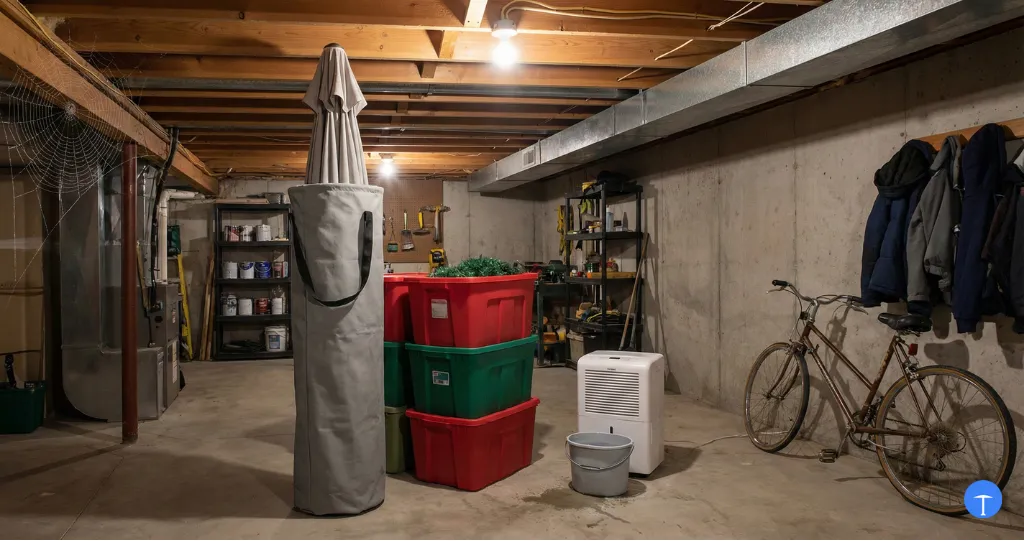
Learning how to store patio umbrella for winter properly can double the lifespan of your shade investment. The process involves cleaning, thorough drying, proper folding, and choosing the right storage location. Skip any of these steps and you risk opening your umbrella next spring to find mold, mildew, faded fabric, or critters that decided your umbrella made a cozy winter home.
Winter weather destroys patio umbrellas left outside. Snow weight bends poles, freeze-thaw cycles crack plastic components, and trapped moisture breeds mold that permanently stains fabric. Even in mild winter climates, extended UV exposure continues breaking down fabric fibers and fading colors.
Proper storage protects more than the canopy. The pole, ribs, and mechanism all suffer from winter exposure. Aluminum corrodes, steel rusts, and tilt mechanisms seize up when moisture freezes inside them. That crank that worked perfectly in October might refuse to budge by April.
Many umbrella warranties require proper off-season storage. Leave your umbrella out all winter and you might void coverage right when you need it most. Even if warranty isn’t a concern, replacement costs add up quickly when umbrellas only last two seasons instead of five or more.
Timing depends on where you live. In northern climates with early frosts, aim to store your umbrella by mid-October before the first hard freeze. The goal is getting it put away before temperatures drop enough to trap moisture inside the pole and damage tilt mechanisms.
Southern regions with mild winters can wait until late November or December. However, if you stop using the umbrella regularly, store it anyway. An umbrella sitting unused collects moisture, debris, and becomes a home for insects and spiders.
Watch the weather forecast rather than the calendar. A warm October week is perfect for cleaning and storing, while waiting for a specific date might land you doing this work in cold rain. Choose a dry day with several hours of sunshine so your umbrella can dry completely after cleaning.
Never store a dirty umbrella. Dirt, pollen, and bird droppings trap moisture against the fabric and create perfect conditions for mold growth during months in storage. Taking fifteen minutes to clean your umbrella before storing it prevents problems that are much harder to fix later.
Mix mild dish soap with warm water and use a soft brush to scrub the entire canopy, working in sections. Pay attention to seams and the area around the pole where debris accumulates. Rinse thoroughly with a garden hose, making sure no soap residue remains. Soap left on fabric attracts dirt and can leave visible streaks.
Clean the pole and ribs while you’re at it. Wipe down all metal components to remove dirt and grime that could cause corrosion during storage. A damp cloth works for most poles, but stubborn spots may need the same soapy solution you used on the canopy.
If you spot existing mildew, treat it before storage. Mix equal parts white vinegar and water, spray affected areas, let sit for ten minutes, then scrub and rinse. For stubborn mildew, diluted bleach works on most fabrics but test a hidden area first.
Tree sap and bird droppings need attention before storage. A paste of baking soda and water lifts most organic stains. Premium fabrics like Sunbrella can handle more aggressive cleaning if needed.
This step is critical for umbrella mold prevention. Storing a damp umbrella guarantees mold and mildew problems by spring. After washing, leave the umbrella fully open in direct sunlight for several hours. Flip it upside down partway through so moisture doesn’t pool at the top where the ribs meet the pole.
Check where fabric meets the pole and where the canopy folds since these spots hold moisture longest. Feel for dampness rather than just looking. If there’s any question about whether it’s completely dry, give it another few hours in the sun.
On overcast days, set up a fan to circulate air around the open canopy. It takes longer without direct sunlight, but rushing this step ruins everything else you’ve done. Some people bring the open umbrella into a garage with a fan running overnight to ensure complete drying.
Once completely dry, close the umbrella using its normal mechanism. Avoid forcing anything. If your umbrella has a tilt function, return it to the straight position before closing. If the string or cord system feels sticky or resistant, a light spray of silicone lubricant helps.
Gather the canopy panels evenly around the pole. Uneven folding creates creases that can weaken fabric over time. Secure with the attached strap or velcro tab if your umbrella has one.
A patio umbrella storage cover provides protection even in indoor storage. Covers keep dust off, prevent accidental snags, and add a layer of defense against moisture that might accumulate in your storage area.
Fabric storage bags work well for most umbrellas. Look for breathable materials rather than plastic, which traps moisture and defeats the purpose of thorough drying. An umbrella storage bag with a zipper makes spring setup easier than bags with drawstrings that bunch fabric unevenly.
Heavy-duty covers with padding protect premium umbrellas in crowded storage spaces. If you have a large cantilever umbrella, the extra padding prevents damage to the offset pole during moves or when other items shift in storage. Some covers include handles that make carrying easier.
Where you store your umbrella matters almost as much as how you prepare it.
Climate-controlled spaces offer the best protection for off-season umbrella storage. Temperature swings in unheated spaces cause condensation that leads to mold, even on a properly dried umbrella. Garage umbrella storage works well for most homeowners, but basement and shed storage each have their own considerations.
| Location | Pros | Cons | Best For | Precautions |
|---|---|---|---|---|
| Garage | Easy access, usually dry | Temperature swings, potential for accidental damage | Most homeowners | Store vertically, away from chemicals and tools |
| Basement | Climate controlled, out of way | Humidity concerns in some homes | Those with dry basements | Use dehumidifier if needed, elevate off floor |
| Shed | Dedicated space, good for large umbrellas | Often unheated, pest concerns | Large cantilever umbrellas | Check for leaks, use rodent deterrent |
| Covered patio | No hauling required | Exposure to humidity, temperature | Mild winter climates only | Must use weatherproof cover |
| Storage unit | Climate control available, secure | Cost, inconvenient access | Those lacking home storage | Choose climate controlled unit |
| Under deck | Uses existing space | Moisture from ground, pests | Last resort option | Elevate on blocks, inspect monthly |
Not everyone has a garage or basement. Apartment dwellers and those with small homes need creative umbrella storage ideas. A closet works if the umbrella fits. Laying it flat under a bed keeps it protected and out of the way. Some people store umbrellas vertically in a corner behind furniture or in a utility closet.
If indoor storage truly isn’t possible, a weatherproof deck box on your patio beats leaving the umbrella exposed. Just make sure the box is large enough that you’re not forcing the umbrella to fit, which can damage the frame or crease the fabric.
Cantilever umbrellas require extra attention due to their size and offset design. Cantilever umbrella storage takes more planning than standard market umbrellas. Many models allow partial disassembly, which makes storage much easier.
Remove the canopy from the frame if your model allows, storing the fabric separately in a breathable bag. The frame can usually collapse and store vertically, taking up much less space than the assembled unit.
If disassembly isn’t practical, these large umbrellas often need to lie flat. Clear wall space in your garage or basement and pad underneath with moving blankets to prevent scratches on the frame. If your cantilever needs repairs before storing, handle those first so it’s ready when warm weather returns.
The base needs separate consideration from the umbrella itself. Sand-filled bases can stay filled if stored in a dry location. The sand actually helps stabilize the base during storage, preventing it from tipping over and getting damaged.
Water-filled bases must be drained completely before storage. Freezing water expands and cracks plastic. Turn the base upside down after draining to release any trapped water from internal channels. Even a small amount of remaining water can cause umbrella winter damage when temperatures drop.
Heavy concrete and granite bases can often stay in place on the patio year-round in most climates. Cover them to prevent staining and make spring cleanup easier. Knowing what size base you need helps when planning storage space for replacement bases.
Not every storage situation is the same. When a surprise storm rolls in during summer, you need different tactics than end-of-season storage.
Quick storage means closing the umbrella, covering it if possible, and securing it against wind. Review tips for wind protection for storm preparation strategies.
Long-term winter storage requires the full cleaning and drying process. Cutting corners creates problems that compound over years, turning a minor mold spot into a ruined canopy.
Before warm weather arrives, inspect your stored umbrella. Open it outdoors and check for mold, pest damage, or musty odors. A light cleaning freshens it up after months in storage.
Test all mechanisms before regular use. Crank it open and closed, check the tilt function, and look for rust on metal parts. Conduct a full safety inspection before the season begins.
Leaving your patio umbrella outside in winter significantly shortens its lifespan. Snow weight bends frames, freeze cycles crack components, and UV exposure continues breaking down fabric. If you must leave it out, close it, cover it with a weatherproof cover, and secure it against wind.
Removing the umbrella from the base is recommended for winter storage. Storing them separately prevents moisture from collecting where the pole meets the base, allows proper drying, and makes moving the umbrella to indoor storage much easier.
Complete drying before storage is the single most important step for preventing mold. Clean the umbrella thoroughly, let it dry in direct sunlight for several hours, and store it in a breathable cover rather than plastic. Choose a storage location with low humidity.
Drain water-filled bases completely before storage because water expands when frozen and cracks plastic. Sand-filled bases can remain filled if stored in a dry location, and the sand helps stabilize the base during storage.
An unheated garage works for winter umbrella storage if the umbrella is completely dry before storing. The main concern is temperature swings that cause condensation. Use a breathable storage cover and store away from exterior walls where temperature changes are most extreme.
Mix mild dish soap with warm water and use a soft brush to scrub the canopy. Rinse thoroughly to remove all soap residue. Treat any mildew with a vinegar solution. Clean the pole and ribs, then allow everything to dry completely in sunlight.
Proper umbrella winter care comes down to four essentials: clean it, dry it completely, fold it properly, and store it in the right location. Taking an hour to do this correctly in fall saves you from buying a replacement next spring.